What Is Pravi Celer?
Pravi Celer is a South Slavic term generally understood as “true celery” or “real celery.” It refers to celery, the familiar aromatic plant known scientifically as Apium graveolens. Kew recognizes Apium graveolens as an accepted species in the Apiaceae family, with a native range extending across parts of Europe, North Africa, and western Asia.
The phrase can seem mysterious when encountered in recipes, gardening articles, or food discussions written for an international audience. In most cases, however, there is no secret vegetable hiding behind the name. The important point is understanding which part or cultivated form of celery the writer means.
Pravi Celer is best approached as a useful food and plant term rather than the name of a newly discovered superfood. Its value comes from celery’s versatility: stalks can provide crunch, leaves add aroma, seeds deliver concentrated flavor, and celery root can form the base of hearty dishes.
Pravi Celer Meaning and Language
The word “pravi” commonly carries the sense of true, real, or genuine in South Slavic usage, while “celer” refers to celery. Together, Pravi Celer can therefore be translated naturally as “true celery” or “real celery.”
That translation also explains why the keyword generates confusion online. Some pages present it as though it identifies a special premium cultivar, while others use it to describe celery in a traditional or whole-plant context. Those interpretations should not automatically be treated as botanical definitions.
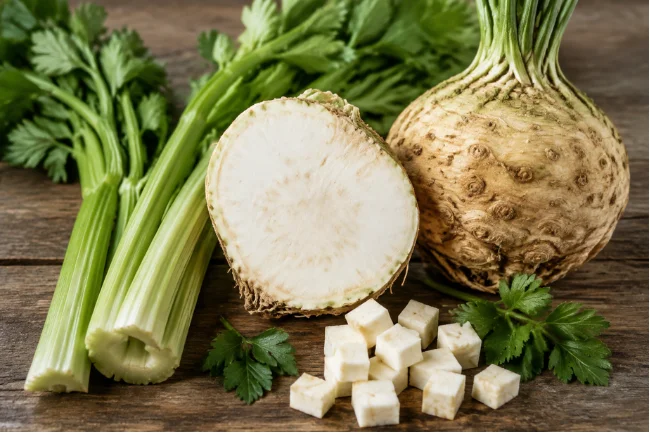
A better approach is to look at the surrounding context. A recipe mentioning chopped stalks probably means conventional stalk celery. A European soup recipe discussing a large edible root may be referring to celeriac, a celery form cultivated specifically for its enlarged base.
Is Pravi Celer a Different Plant?
No. Pravi Celer is not recognized by Kew as a separate species. The botanical name associated with true celery is Apium graveolens.
However, celery has been cultivated into forms with noticeably different characteristics. This is why two foods can look quite different while still belonging to the same species.
The main distinction is what growers select the plant for:
| Celery form | Main edible part | Typical use |
|---|---|---|
| Stalk celery | Thick leaf stalks | Salads, soups, snacks |
| Leaf celery | Leaves and thinner stalks | Herbs, stocks, sauces |
| Celeriac | Enlarged edible base | Soups, mash, roasts |
| Celery seed | Small aromatic seeds | Seasoning and spice blends |
| This distinction matters because the term Pravi Celer does not, by itself, tell you which form is being sold or discussed. |
Pravi Celer and Celeriac: What’s the Difference?
One of the biggest sources of confusion is the relationship between celery and celeriac.
Both are cultivated forms associated with Apium graveolens, but their kitchen personalities are very different. Stalk celery is valued for its crisp, juicy stems, while celeriac is grown for its knobbly, swollen base.
Celeriac has a firm interior with a mild celery-like aroma and earthy character. It works particularly well in winter soups, purees, vegetable roasts, gratins, and dishes where you want a deeper flavor than ordinary stalk celery provides.
So, Pravi Celer should not automatically be translated as “celeriac.” The correct interpretation depends on the recipe, product description, and regional context.
What Does Pravi Celer Taste Like?
Celery has a distinctive flavor that is difficult to replace completely. It is fresh, aromatic, slightly bitter, and mildly savory, with a crisp texture when raw.
Stalk celery is particularly useful when you need contrast in a dish. Its crunch can brighten creamy salads, while its aromatic quality can strengthen soups, sauces, and stews.
The leaves generally have a stronger flavor than the stalks. Rather than discarding them, chop them finely and use them like an herb.
Celeriac has a different texture and a more earthy flavor. Once cooked, it becomes soft and slightly sweet, making it useful in purees and roasted vegetable dishes.
Nutritional Value of Pravi Celer
Celery is known for being a water-rich, relatively low-calorie vegetable that can fit easily into a balanced diet. It also contributes fiber and micronutrients, although the exact nutritional profile varies with the plant part, portion size, and preparation.
One of its practical strengths is volume. Celery can add bulk, crunch, and freshness without making a meal especially heavy.
That makes it useful for people trying to build meals around vegetables rather than relying on highly processed ingredients. It can be eaten raw, cooked, chopped into sauces, blended into soups, or combined with other vegetables.
Still, nutrition claims should remain realistic. Pravi Celer is food, not a cure-all, and no ordinary serving of celery should be treated as a substitute for medical care.
Potential Benefits of Including Pravi Celer
A varied diet matters more than any single vegetable, but celery can make a useful contribution.
1. Adds Hydration
Fresh celery contains a high proportion of water. Eating water-rich vegetables can contribute to overall fluid intake, especially when combined with regular drinking habits.
2. Provides Fiber
Celery contributes dietary fiber, which supports normal digestive function. Using celery alongside beans, whole grains, vegetables, fruit, and other fiber-rich foods is a more effective strategy than focusing on one ingredient alone.
3. Adds Micronutrients
Celery supplies several vitamins and minerals in modest amounts. Its nutritional contribution becomes more meaningful as part of a varied diet rather than as a stand-alone health strategy.
4. Helps Build Flavor Without Heavy Ingredients
Celery is especially valuable from a cooking perspective. It can bring aroma and texture to meals without relying on large amounts of sugar, rich sauces, or heavily processed flavorings.
5. Encourages Whole-Plant Cooking
Using stalks, leaves, and celery root can reduce kitchen waste. That practical advantage is easy to overlook, yet it can make everyday cooking more economical.
Pravi Celer in Traditional Cooking
Celery has a long history as a food and flavoring plant. Kew’s plant record describes its use for food and notes historical culinary uses, including flavoring and the use of its edible leaf stalks in soups and salads.
In many European food traditions, celery functions as part of an aromatic base alongside onions, carrots, parsley, and other vegetables. The goal is not always to make celery the star of the dish. Instead, it builds a deeper background flavor.
This is one reason a good celery stalk can matter more than its modest appearance suggests. Remove it from a soup recipe and the final dish may taste noticeably flatter.
How to Use Pravi Celer in Everyday Meals
The simplest way to use Pravi Celer is to match the part of the plant to the job.
Raw Celery
Slice fresh stalks into salads, sandwiches, wraps, or snack plates. Pair them with hummus, yogurt-based dips, nut butter, or other spreads for contrasting texture.
Soups and Stews
Dice celery with onion and carrot at the beginning of cooking. This creates an aromatic foundation that works well in vegetable soups, chicken dishes, lentil stews, and many slow-cooked recipes.
Celery Leaves
Treat the leaves like a fresh herb. Finely chopped leaves can brighten stocks, sauces, salads, and finished soups.
Celeriac
Peel the rough outer skin and cut the interior into chunks. It can be boiled, roasted, mashed, or combined with potatoes and other root vegetables.
Celery Seed
Celery seed has a much more concentrated flavor than fresh stalks. Use it sparingly in seasoning blends, pickles, dressings, and savory recipes.
How to Choose Fresh Pravi Celer
Freshness makes a major difference in celery’s texture.
Look for stalks that appear firm and crisp rather than limp or rubbery. The leaves should look reasonably fresh, and the vegetable should not have widespread dark, slimy, or damaged areas.
For celeriac, choose a firm root that feels heavy for its size. Avoid pieces with extensive soft spots, deep decay, or obvious damage.
A common mistake is buying celery for one recipe and forgetting the rest of the bunch. Plan multiple uses at the same time—for example, soup today, salad tomorrow, and chopped leaves for a finishing garnish.
How to Store Pravi Celer
Celery generally keeps best when stored cold and protected from excessive moisture loss. A refrigerator vegetable drawer is a practical place to keep it.
Do not let damaged or decaying pieces sit against the rest of the bunch. Remove compromised sections early so they do not affect neighboring parts.
For longer-term meal preparation, chopped celery can also be incorporated into cooked dishes before storage. This is often more useful than trying to preserve its original crispness indefinitely.
Growing Pravi Celer at Home
Growing celery can be rewarding, but it requires more attention than some easy garden vegetables. Kew describes Apium graveolens as a biennial associated with temperate conditions and notes its occurrence in damp places and cultivated gardens.
Celery performs best when it has consistent access to moisture and reasonably fertile soil. Dry conditions can make growing more difficult because the plant performs poorly when moisture is erratic.
Gardeners should focus on steady watering, adequate nutrition, good light, and protection from extreme conditions. The exact planting schedule depends heavily on the local climate.
If your goal is a successful first crop, do not treat celery as a plant that can simply be ignored after planting. Consistency is far more important than occasional heavy watering.
Common Myths About Pravi Celer
The internet has created several avoidable misunderstandings around this keyword.
Myth 1: Pravi Celer is a newly discovered superfood.
There is no botanical basis for treating the phrase itself as the name of a new species. It is associated with Apium graveolens.
Myth 2: Pravi Celer always means celeriac.
Not necessarily. The context may refer to stalk celery, leafy celery, celery root, or another edible form associated with the same species.
Myth 3: Celery juice provides extraordinary medical benefits.
Celery can be part of a nutritious diet, but impressive health claims should not replace evidence-based medical advice.
Myth 4: The word “pravi” guarantees organic or chemical-free farming.
It does not. Growing methods should be verified from the actual producer rather than inferred from the name.
Pravi Celer vs. Common Supermarket Celery
The phrase can make ordinary celery sound exotic, but there may be no dramatic botanical difference.
A supermarket bunch can still be perfectly good celery. In fact, what matters more is freshness, cultivar, growing conditions, and how the plant was handled after harvest.
If a seller claims that Pravi Celer is a unique variety, ask for the cultivar name and growing details. A real botanical distinction should be supported by identifiable plant information rather than marketing language.
Who Should Add More Celery to Their Meals?
For most people, celery is a versatile vegetable that can be included as part of a varied eating pattern. It is particularly useful for cooks who want inexpensive ingredients that work across many types of dishes.
People who dislike raw celery may find that cooked celery is more appealing. Slow cooking softens its texture and blends its strong aroma into the overall dish.
Likewise, anyone who thinks celery is only good for snacking can expand its role dramatically by using it in sauces, soups, stocks, roasted vegetable dishes, and salads.
Final Takeaway on Pravi Celer
Pravi Celer is best understood as a South Slavic expression connected with “true” or “real” celery, not as a mysterious new superfood. The plant behind the term is Apium graveolens, an established species with a long history of food use.
The most useful way to understand Pravi Celer is to focus on the plant itself: know which form you have, use the right part for the recipe, store it properly, and avoid exaggerated health claims.
Whether you are reading a Balkan recipe, shopping for celery, exploring celeriac, or planning a home garden, the key is simple. Pravi Celer is not about mystery—it is about understanding and making better use of a remarkably versatile vegetable.