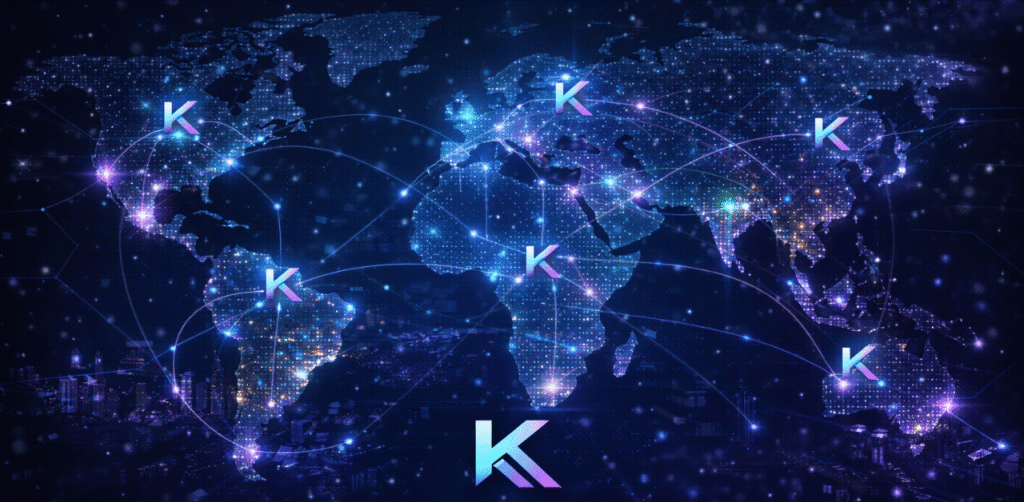
Kalyxen is a newer decentralized-finance project built around combining lending, staking, borrowing, and crypto payments in one ecosystem. Its native token is presented as KXN, while the broader pitch is to reduce the need to move between separate DeFi platforms.
For anyone researching the project, the important question is not whether the concept sounds impressive. The real issue is whether its products, token economics, security evidence, roadmap, and market activity provide enough substance to justify serious due diligence.
What Is Kalyxen?
The project describes itself as a unified DeFi protocol for earning, borrowing, and payments. Its official website says users are intended to deposit assets into lending pools, borrow against collateral, stake KXN, and eventually use a payment gateway that converts crypto into a merchant’s preferred currency.
The core proposition is convenience: instead of using one application for lending, another for swapping, and another for payments, the platform wants those functions to work together.
How Kalyxen Works
The ecosystem centers on three functions.
Lending and Yield
Users are told they can deposit supported assets into lending pools and earn yield. The project also describes auto-compounding deposit representations called mtTokens.
Its staking model allows KXN holders to stake tokens and potentially receive rewards connected to protocol activity. The official site advertises presale staking of up to 187% APY while noting that the rate can decrease as more tokens are staked.
High advertised yields need careful interpretation. APY is a projected rate under stated conditions, not a guarantee of profit. Token prices can also fall faster than staking rewards accumulate.
Borrowing Against Collateral
The platform proposes giving users liquidity without requiring them to sell crypto. Its materials describe overcollateralized borrowing and separate lending approaches for stable assets and certain other assets.
Before using a lending market, confirm accepted collateral, loan-to-value limits, oracle design, liquidation triggers, and available liquidity.
Crypto Payments
The payment feature is one of the more distinctive claims. Kalyxen says its gateway can convert a user’s token into a merchant’s preferred currency through a single transaction and plans to provide merchant APIs and cross-chain support.
This could create utility beyond speculation, but a payment gateway is not the same as broad adoption. Merchant participation, transaction volume, settlement reliability, fees, and compliance will determine whether the feature becomes commercially meaningful.
Tokenomics Explained
The official website states a maximum supply of 5 billion KXN and publishes the following allocations.
| Allocation | Share |
|---|---|
| Presale | 36% |
| Staking & Rewards | 14% |
| Liquidity | 12% |
| Ecosystem Growth | 10% |
| Security Reserve | 8% |
| Partnerships | 6% |
| Community & Airdrops | 5% |
| Team | 5% |
| Deflationary Burn | 4% |
The project says liquidity is locked for at least 12 months and the team allocation follows an 18-month vesting structure with a six-month cliff. It also describes fee-based burning and revenue-driven buybacks.
Treat these figures as claims to verify rather than proof of value. Investors should check token balances, vesting addresses, liquidity locks, and fee logic on-chain.
There is also a data-consistency issue. Third-party directories do not always display identical information about KXN. Coinscope presents the asset as a DeFi protocol, while other listings have shown conflicting symbols, supply figures, or utility descriptions.
Presale and Pricing
The official site currently presents an 11-phase presale. It lists Phase 1 at $0.008, Phase 2 at $0.012, and Phase 3 at $0.012, with later phases increasing and a stated listing price of $0.12.
The difference between presale prices and the proposed listing price is marketed as potential upside. That is not a guaranteed return.
Presale buyers should also distinguish an allocation from a liquid market position. Vesting, limited exchange access, thin liquidity, and post-launch volatility can materially affect outcomes.
Verify the current presale phase through the official interface and compare its contract address with independent blockchain data.
Roadmap and Development
The published roadmap covers smart-contract deployment, staking, lending testnet work, a payment gateway MVP, cross-chain development, exchange listings, a mobile application, governance, and later real-world-asset integrations.
The development page says earlier milestones included architecture work, oracle integration, security testing, frontend and staking releases, and presale contract deployment. Payment and cross-chain development are identified as an ongoing stage.
Roadmaps show direction, not delivery; public repositories, verifiable contracts, testnets, audits, and actual product usage are stronger evidence.
Is Kalyxen Audited?
The official website states that Kalyxen passed a CertiK audit and lists that audit among its trust signals.
An audit is useful, but it is not a blanket guarantee of safety. Check the exact audited contracts, audit date, findings, remediation status, and deployed addresses, then confirm the live contracts match the reviewed versions.
Third-party information deserves scrutiny too. CoinSniper has displayed project and security information that differs from the official site, including a listing that previously showed no audit information.
Kalyxen Security: What to Check
Security research should happen before connecting a wallet or sending funds.
Inspect the domain carefully and avoid random social links, advertisements, or lookalike sites. Verify the token contract, blockchain network, source-code status, ownership controls, minting permissions, and transfer restrictions where applicable.
Holder concentration matters: thousands of wallets do not necessarily mean ownership is widely distributed. Also examine liquidity and treasury activity, since a published valuation can coexist with limited real liquidity.
Potential Advantages
The main appeal is combining lending, borrowing, staking, and payments in one ecosystem, potentially simplifying workflows for users who otherwise rely on several DeFi applications. The published roadmap and allocation model also provide concrete claims researchers can test.
Key Risks and Red Flags
The largest risk is execution. A DeFi project can have polished branding and attractive yield projections while failing to create durable liquidity or real user demand.
Presale risk is also significant. Early buyers may have limited price discovery and fewer exit options than participants in a mature market.
Smart-contract risk remains important even where an audit exists. Oracle failures, access-control weaknesses, economic exploits, bridge vulnerabilities, and liquidation problems can lead to losses.
Information inconsistency is another diligence issue. Different directories have published conflicting token symbols, supply figures, or security details, so researchers should resolve discrepancies through official documentation and on-chain evidence.
External domain-security warnings deserve attention. PhishDestroy published a 2026 report flagging kalyxen.io for investigation and assigning it a high-risk score. That is an external warning, not proof that the project itself is fraudulent, but it is a reason to verify the current domain and security status independently.
A separate domain using the same name, kalyxen.icu, was reported as a Binance-impersonation crypto scam. Users should therefore be especially careful with URLs presented as official.
How to Research Kalyxen Before Buying
A disciplined process is more useful than following a presale countdown.
- Start with official documentation and record the contract address.
- Verify the address on the relevant blockchain explorer.
- Check whether deployed code matches audited contracts.
- Review token distribution and major holder wallets.
- Inspect liquidity locks and vesting arrangements.
- Separate live products from roadmap promises.
- Find independent audit documentation.
- Verify claimed exchange, bridge, wallet, and payment partnerships through those providers.
- Treat APY and projected listing prices as claims, not guaranteed returns.
- Never connect a wallet through an unfamiliar domain simply because the branding looks identical.
Is the Project Worth Watching?
Kalyxen is best approached as an early-stage DeFi project rather than an established financial network. Its appeal comes from combining several services under one token, while its biggest challenge is proving that those ideas can become secure, liquid, and widely used products.
The strongest signals to watch are measurable ones: functioning lending markets, meaningful liquidity, verified contracts, transparent treasury activity, real payment usage, and sustainable fee generation.
Do not evaluate a crypto project solely from a presale percentage, advertised APY, or projected listing price. Evaluate the contracts, products, liquidity, users, security evidence, and independently verifiable activity.
Final Verdict on Kalyxen
Kalyxen presents an ambitious attempt to consolidate major DeFi functions into one ecosystem. Its stated combination of yield, collateralized borrowing, staking, and payments gives it a clear product narrative, while its published tokenomics and roadmap provide useful checkpoints for due diligence.
At the same time, early-stage crypto projects carry substantial uncertainty. Presale economics, smart-contract risk, liquidity risk, inconsistent third-party information, and external domain-security warnings mean prospective users should verify important claims before committing capital.
For now, treat Kalyxen as a project to research carefully, not as a guaranteed investment opportunity. Only on-chain evidence and real market activity can establish whether the protocol delivers on its promises.