When people search for Brasssmile, they may not be looking for one clearly defined product, service, or concept. Current search results connect the name with different types of websites and interpretations, which makes context especially important. A name appearing in search results does not automatically establish that it is a recognized medical term, established company, or officially defined concept.
This guide takes a practical approach. It explains how to understand the name, separate a brand name from a descriptive phrase, evaluate claims, and decide what information deserves your attention.
What Is Brasssmile?
The name is best treated as a context-dependent label rather than a term with one universally accepted definition. Search results currently show the name associated with general-interest publishing and also with websites that use it in dental or smile-related content. That variation means readers should identify the exact website, product, or service they are researching before drawing conclusions.
For example, Brasssmile.com is described in search results as a multi-category publishing website covering areas such as business, education, finance, health, technology, insurance, and travel. Other domains use similar branding for dental information. These are different entities, so their claims, ownership, editorial standards, and services should not be assumed to be connected.
Quick Facts About Brasssmile
| Question | Practical answer |
|---|---|
| Is it one universally defined term? | No. Its meaning depends on context and the website using the name. |
| Could it refer to a website? | Yes. Current results show the name used by publishing and informational sites. |
| Is it automatically a dental diagnosis? | No. A brand or phrase should not be confused with a clinical diagnosis. |
| What should you check first? | The exact domain, About page, authors, contact details, and claims. |
| Is a search result proof of legitimacy? | No. Search visibility alone does not verify a business or medical claim. |
Why the Meaning of Brasssmile Can Be Confusing
Brand names are often reused across unrelated projects. A short, memorable word can appear on several domains, and search engines may surface pages that use the same spelling for completely different purposes.
That is why the first step is not asking whether the name is “good” or “bad.” The better question is: which site or service are you actually looking at?
Check the full domain name rather than relying on the logo or page title. Look at the site’s About page, legal pages, contact information, publication dates, and author credentials. If the site discusses health, finance, or another high-stakes topic, examine whether qualified professionals are clearly identified and whether important claims are supported by reputable sources.
Brasssmile and Dental Content: What Readers Should Know
Some current pages use the name as a label for information about tooth color, smile appearance, or whitening. In dental terminology, however, tooth discoloration is normally discussed by its causes and type rather than by relying on one informal name.
The American Dental Association explains that tooth discoloration can be broadly categorized as extrinsic, intrinsic, or a combination of both. Extrinsic staining can be associated with pigmented foods and drinks, tobacco, and other external factors, while intrinsic discoloration can occur within the tooth and may have causes such as aging, development-related changes, certain medications, trauma, or dental conditions.
That distinction matters if a page makes promises about whitening. Surface stains and deeper discoloration do not always respond the same way, and whitening cannot change the color of tooth-colored restorations such as crowns or veneers.
Does Brasssmile Mean Yellow Teeth?
Not necessarily. Some websites use the name to describe a warm, yellowish, or “brassy” smile, but this is not the same as saying the term itself is a standardized dental diagnosis.
A slightly yellow smile can be completely different from staining caused by coffee or tobacco. Natural dentin is more yellow than enamel, and as enamel changes with age, the underlying dentin can become more visible. Trauma, medications, developmental conditions, and dental work can also change the appearance of a tooth.
The key lesson is simple: identify the actual cause before choosing a solution.
How to Evaluate a Brasssmile Website
If your search leads to a website using the name, use a quick credibility check before relying on it.
1. Confirm the Exact Domain
The spelling alone is not enough. A .com domain, a country-code domain, and a similarly named alternative site may represent completely separate organizations.
2. Read the About and Contact Pages
Look for a clearly stated purpose, identifiable operators, physical or business contact information where appropriate, and a transparent explanation of what the site actually offers.
3. Check Authors and Reviewers
For health content, author expertise matters. A page discussing dental treatment should distinguish editorial writing from professional clinical advice and identify qualified reviewers when medical accuracy is being claimed.
4. Look for Evidence
Strong pages explain where important claims come from. For dental whitening, reliable sources such as the ADA and NHS explain the differences between products, potential side effects, and situations where whitening may not be appropriate.
5. Watch for Absolute Promises
Be cautious when any page claims that one method will work for everyone, permanently transform tooth color, or solve a problem without examining the underlying cause.
Brasssmile and Teeth Whitening: What Actually Works?
If your interest in Brasssmile is related to a brighter smile, start with the basics rather than chasing the strongest whitening product.
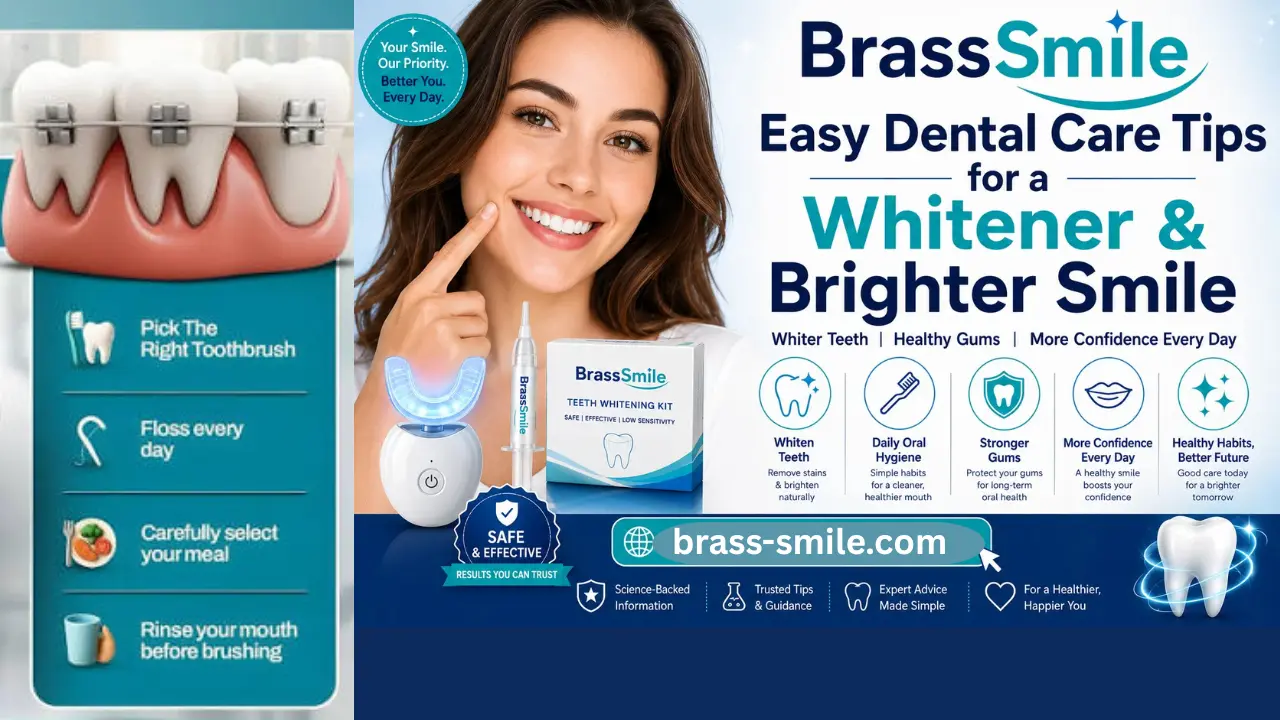
The ADA notes that whitening products may contain hydrogen peroxide or carbamide peroxide. Different approaches include professional in-office whitening, dentist-provided take-home trays, and over-the-counter products such as strips and whitening toothpastes.
Whitening toothpaste primarily helps remove surface stains. Bleaching products can change tooth color more directly, but results depend on the type of discoloration.
Professional evaluation is particularly useful when one tooth is significantly darker than the others, when discoloration appeared after an injury, or when there are symptoms such as pain or sensitivity. A single dark tooth can have causes that require more than cosmetic treatment.
Risks of Overusing Whitening
More whitening is not automatically better. Tooth sensitivity and gum irritation are among the most common side effects of whitening, and overuse can damage enamel or irritate soft tissues.
The NHS also advises having teeth and gums checked before whitening and notes that professional dental supervision is the safest approach when using strong whitening chemicals.
If an article recommends aggressive or unusually frequent whitening, compare that advice with established dental guidance instead of treating the recommendation as automatically trustworthy.
Everyday Habits That Support a Brighter Smile
You do not need an extreme routine to protect the appearance of your teeth. Consistent oral care is more useful than constantly switching between trendy products.
Brush twice a day with fluoride toothpaste and clean between your teeth daily. Limiting frequent exposure to heavily pigmented drinks and avoiding tobacco can also reduce some forms of surface staining.
Regular dental checkups can help identify plaque buildup, decay, gum problems, or other issues that may affect the way your smile looks. A cosmetic concern can sometimes be a clue that a health issue deserves attention.
Common Mistakes People Make When Searching Brasssmile
The first mistake is assuming every site with the same name is connected. It is safer to treat each domain as a separate entity until ownership or affiliation is clearly established.
The second is confusing a descriptive phrase with a diagnosis. If the name appears in an article about tooth color, that does not mean the phrase itself identifies a recognized disease or condition.
The third is judging credibility by design alone. A professional-looking website can still contain weak evidence, unclear authorship, or exaggerated claims.
The fourth is accepting search snippets as proof. Search results are useful for discovery, not verification. Open the actual page, inspect its sources, and compare important claims with authoritative references.
Is Brasssmile Worth Following?
That depends on what you mean by the name and what you want from it. If you are evaluating a publishing website, judge it by the quality, originality, transparency, and sourcing of its articles. If you are looking at dental content, judge the material by the accuracy of its health information and whether it aligns with established professional guidance.
In either case, the strongest approach is evidence-first research. A useful resource should make its purpose clear, avoid exaggerated promises, distinguish facts from opinions, and help readers understand what they can verify for themselves.
Final Takeaway
Brasssmile is not a term you should interpret without context. Online results currently attach the name to multiple websites and uses, including publishing and dental-focused content, so the exact domain and purpose matter.
For anyone researching the brand, the smartest approach is straightforward: verify the domain, check who publishes the information, inspect the evidence, and avoid confusing branding with professional credentials. When the topic involves your teeth or health, use established dental guidance and speak with a qualified professional for personalized advice.
Search names can lead you to information, but careful verification tells you whether that information deserves your trust. That principle is the most useful way to approach Brasssmile, whatever context brought you to the search in the first place.