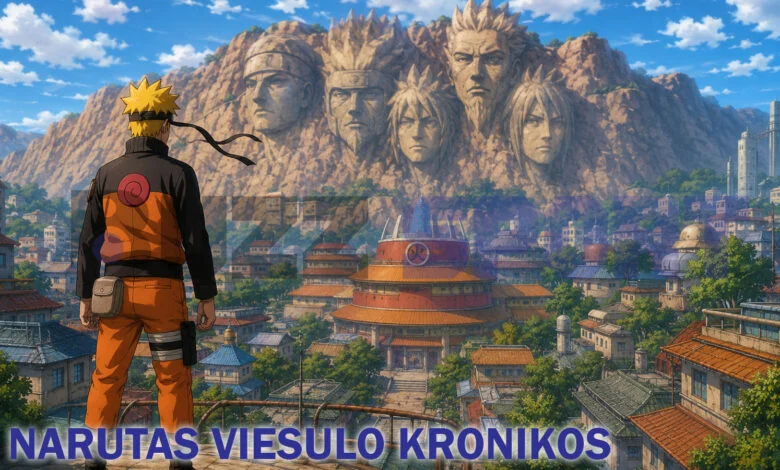
If you searched for Narutas viesulo kronikos, you may be wondering whether it is a separate anime, a Lithuanian spin-off, or another name for a familiar series. The answer is straightforward: the title is the Lithuanian name for Naruto: Shippuden.
The localized name can make the series look unfamiliar when searching for episodes, reviews, or viewing options.
Quick Facts
| Detail | Information |
|---|---|
| Lithuanian title | Narutas: Viesulo kronikos |
| International title | Naruto: Shippuden |
| Japanese title | NARUTO -ナルト- 疾風伝 |
| Format | Television anime |
| Based on | Part II of Masashi Kishimoto’s Naruto manga |
| Main character | Naruto Uzumaki |
| Original Japanese run | 2007–2017 |
| Total episodes | 500 |
| Animation studio | Pierrot |
| Lithuanian television association | BTV |
| Lithuanian release | Around 2013, according to fan-maintained broadcast records |
| VIZ lists Naruto: Shippuden as a 500-episode anime brand, while fan-maintained Lithuanian media records associate the localized version with BTV and place its Lithuanian premiere around 2013. |
What Is the Lithuanian Naruto: Shippuden Title?
At its core, Narutas viesulo kronikos refers to the Lithuanian-language presentation of Naruto: Shippuden. It is not a new storyline created independently of the Japanese series and does not introduce a separate canon.
The story continues Naruto Uzumaki’s journey after a major training period. He returns to the Hidden Leaf Village older, stronger, and more experienced, but the threats around him have become much more serious.
The sequel adapts the second major part of Masashi Kishimoto’s manga. Its scale grows from village missions into conflicts involving powerful organizations, political alliances, and the fate of the wider shinobi world.
What Does Narutas viesulo kronikos Mean?
The title becomes easier to understand when it is broken into parts. “Narutas” is the Lithuanian form used for Naruto, while “viesulo” comes from viesulas, a Lithuanian word for a whirlwind or tornado-like force. Lithuanian reference material confirms the genitive form “viesulo.”
“Kronikos” corresponds to “chronicles.” The Lithuanian Encyclopaedia defines kronika as a chronological account of events, which fits the subtitle’s idea of an ongoing recorded saga.
So Narutas viesulo kronikos can be rendered roughly as “Naruto: Hurricane Chronicles,” “Naruto: Whirlwind Chronicles,” or “Naruto: Storm Chronicles.” These English versions are approximate, but they capture the central meaning.
Narutas viesulo kronikos: How the Story Changes After Naruto
The sequel does not reset the characters. Naruto returns with visible growth, and the people around him have changed too.
Team 7 becomes important again. Naruto and Sakura are more capable, Kakashi remains a central mentor, and Sasuke’s absence becomes one of the story’s strongest emotional forces.
At the same time, Akatsuki becomes a direct threat. The organization is no longer simply a collection of dangerous missing-nin; it becomes tied to the larger structure of the shinobi world.
Major developments include:
- Naruto’s growing control over Kurama and his own chakra.
- Sasuke’s pursuit of revenge, truth, and identity.
- Akatsuki’s hunt for the tailed beasts.
- Pain’s attack on the Hidden Leaf.
- The hidden history surrounding the Uchiha clan.
- The Fourth Great Ninja War and the allied shinobi forces.
- Naruto and Sasuke confronting the cycle of hatred that shaped their world.
These arcs repeatedly ask whether strength can solve problems created by fear, grief, revenge, and isolation.
Narutas viesulo kronikos: Key Characters
Naruto Uzumaki remains the emotional center. His defining trait is not raw talent but persistence. He repeatedly chooses connection over abandonment, a choice that becomes crucial as the story expands into larger conflicts.
Sasuke Uchiha serves as Naruto’s mirror. Both experience loss and loneliness, but they draw very different conclusions about revenge, power, and how society should change.
Sakura Haruno develops significantly. Her medical-ninja abilities, physical strength, battlefield judgment, and loyalty become increasingly valuable as the stakes rise.
Kakashi Hatake represents experience and restraint. His relationship with Naruto and Sakura changes as they mature, while his personal history becomes more important to the wider plot.
The supporting cast broadens those themes through characters such as Jiraiya, Tsunade, Gaara, Shikamaru, Hinata, Itachi, Obito, and Madara.
Why narutas viesulo kronikos Has Lasting Appeal
The biggest strength of Narutas viesulo kronikos is its combination of spectacle and character continuity. Battles matter because viewers understand what the characters have lost, what they fear, and what they are trying to protect.
The story also relies on strong thematic contrasts. Naruto believes bonds can be rebuilt; Sasuke often sees bonds as a source of vulnerability. Some characters choose revenge, while others pursue forgiveness. Leaders value stability, while younger characters challenge inherited systems.
Long-form storytelling also rewards attention: a character or detail introduced early can become important much later.
The Lithuanian Viewing Experience
For Lithuanian audiences, Narutas viesulo kronikos has an additional layer of interest because the localized title is tied to television history. Fan-maintained LTMedia records identify BTV as the channel associated with the Lithuanian voice-over version and place its premiere around 2013.
The earlier series was also localized as “Narutas” and aired on LNK beginning in September 2008, according to the same community-maintained archive. This gives useful context: Lithuanian viewers could encounter the franchise first as Narutas and then continue with the localized sequel title.
Because detailed Lithuanian broadcast information is preserved mainly through community archives, exact dates and credits should be treated cautiously. The connection to Naruto: Shippuden is much clearer than every production detail.
Is the Lithuanian Title the Same as Naruto: Shippuden?
Yes. Narutas viesulo kronikos and Naruto: Shippuden refer to the same underlying anime series, not two separate stories.
The core plot, characters, battles, villains, and conclusion are the same. Differences mainly concern localization, especially the title and the language presentation for Lithuanian audiences.
Use the localized phrase for local references, but use Naruto: Shippuden for most international episode databases.
The Japanese television series ran from February 15, 2007, through March 23, 2017, with 500 episodes.
How to Watch or Research narutas viesulo kronikos Today
For anyone researching Narutas viesulo kronikos, the international title is usually more useful because episode guides and official catalogues organize the series under Naruto: Shippuden. VIZ lists the property at 500 episodes and provides release information for home-video and digital editions.
For Lithuanian television history, search the localized title together with terms such as BTV, Lithuanian voice-over, or archived broadcast. This makes it easier to separate local references from pages that merely repeat international franchise information.
A common mistake is assuming that every page using the localized name represents a different cut or different canon. In most cases, it is another naming and localization layer for the same series.
Is Naruto: Shippuden Worth Watching?
For new viewers, the strongest reason to watch is character development. The sequel pushes familiar relationships into harder choices.
For returning fans, the attraction is scale: the story grows into an examination of war, legacy, loyalty, grief, and political power.
Some arcs focus tightly on one character, while others involve entire nations. The long television run also contains anime-original material, so viewers seeking a faster route may prefer an episode guide that separates core arcs from filler.
The central narrative remains effective because Naruto’s belief that people can escape loneliness and hatred is repeatedly tested by real loss.
Common Questions About the Lithuanian Title
Is the Lithuanian title a separate anime?
No. It is the Lithuanian title associated with Naruto: Shippuden, the sequel to the original Naruto anime.
How many episodes does narutas viesulo kronikos have?
The underlying Naruto: Shippuden series has 500 episodes.
When did Naruto: Shippuden originally air?
The Japanese television run began in February 2007 and concluded in March 2017.
What is the title’s meaning?
The phrase combines the Lithuanian form of Naruto’s name with words connected to a whirlwind and chronicles. A natural English interpretation is “Naruto: Hurricane Chronicles.”
Was there a Lithuanian version before Shippuden?
Yes. The first Naruto anime was localized as “Narutas,” with records placing its LNK premiere in September 2008. The sequel was later associated with BTV under the Lithuanian title.
Final Verdict
Narutas viesulo kronikos is best understood as the Lithuanian-localized title for Naruto: Shippuden, not a separate spin-off. Once that connection is established, most searches become much easier: fans are usually looking for the sequel’s story, episodes, characters, Lithuanian broadcast history, or the relationship between the localized and international names.
What makes the series memorable is not simply its 500-episode scale. It is the way long-term character relationships turn battles into emotional turning points, while themes of perseverance, redemption, sacrifice, and breaking the cycle of hatred give the story a lasting identity.
For anyone who encountered the franchise under the name Narutas viesulo kronikos, understanding its connection to Naruto: Shippuden is the key to finding the full story and its place in the wider Naruto universe.