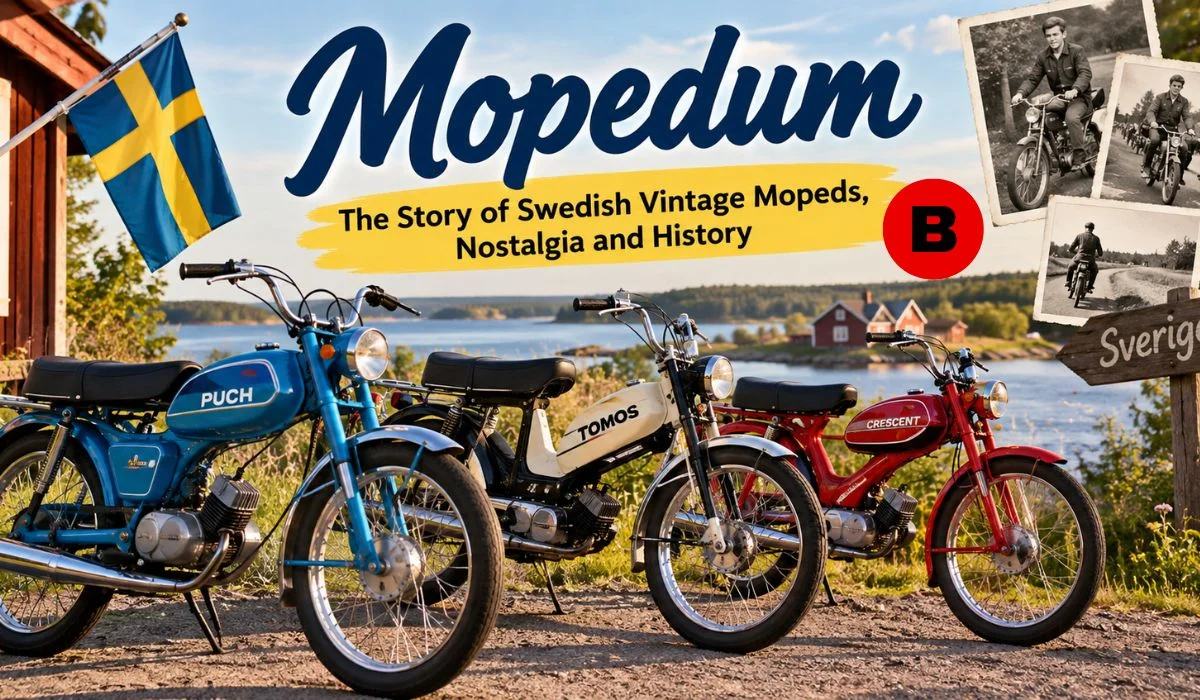
For over a decade, a small coastal town in Sweden housed one of Europe’s most unique cultural time capsules. Mopedum was far more than a simple collection of vintage vehicles; it was an immersive journey through Swedish everyday life. Located in the old swimming hall of Nynäshamn, this beloved establishment operated as a fully realized nostalgia museum. It connected transport history directly with the clothing, music, and household items that defined the mid-20th century. Visitors didn’t just look at old machines; they stepped directly into the living rooms and kitchens of the past. Although the physical museum closed permanently in December 2022, its cultural impact remains a vital part of Swedish transport history.
Quick Facts: The Museum at a Glance
- Official Name: Mopedum (also known as Svenska Nostalgimuseet)
- Location: Nynäshamn, Sweden (Southern Stockholm Archipelago)
- Years Active: May 2012 – December 2022
- Founders: Nisse and Lotta Skogmyr
- Historical Focus: Swedish everyday life and transport culture from 1952 to 1979
- Current Status: Permanently Closed (Select exhibits relocated to Vällingby Centrum)
What Was Mopedum? A Journey Through Swedish Nostalgia
This unique institution was carefully designed to blur the line between a traditional vehicle gallery and a cultural heritage site. When founders Nisse and Lotta Skogmyr opened the doors in May 2012, they introduced a brilliantly fresh approach to curation. The opening ceremony was inaugurated by beloved Swedish singer Lill-Babs, setting the tone for an experience rooted deeply in mid-century pop culture. Instead of lining up machines in chronological rows with dry technical placards, the curators built elaborate historical stages.
These immersive period rooms captured the exact environments where these vehicles were historically parked, repaired, and admired. Walking through Mopedum meant navigating a meticulously reconstructed timeline of Swedish social evolution. You could observe the transition from the post-war practicality of the 1950s straight through to the velour-clad disco era of the late 1970s. The vehicles served as visual anchors, but the true focus was always on the everyday human experience surrounding them.
The Golden Age of the Swedish Moped (1952–1979)
The timeline showcased here was not chosen at random; it perfectly bracketed the golden age of lightweight transport in Sweden. In 1952, the Swedish government officially legalized the moped (a portmanteau of motor and pedaler) for use without a driver’s license. This legislative shift instantly transformed personal mobility, giving ordinary workers and rural teenagers unprecedented freedom. The exhibition followed this cultural explosion, using hundreds of vintage two-wheelers as historical markers.
Visitors could trace the design evolution of legendary Swedish brands like Crescent, Husqvarna, Monark, and Fram. You could see how the heavy, utilitarian commuter bikes of the early 50s morphed into the sleek, brightly colored status symbols of the 70s. By 1979, changing traffic regulations and shifting youth trends brought this distinct cultural era to a close. Mopedum perfectly encapsulated this 27-year window, preserving the exact moment when two-stroke engines ruled the Swedish suburbs.
Step Inside the Recreated Period Rooms
What truly elevated Mopedum above a standard garage exhibit was its obsessive attention to domestic detail. The building featured fully furnished kitchens equipped with classic “Reda” glass storage shelves and mid-century teak cabinets. Nostalgic visitors often remarked that the displays looked exactly like their grandparents’ homes, right down to the period-accurate packaging in the cupboards. You could almost smell the “radiokaka” (a classic Swedish chocolate and biscuit treat) resting on the vintage counters.
The teenager rooms were equally detailed, scattered with Carmen Curlers, vinyl records, and early foosball tables. Shop displays featured authentic clothing, advertising signs, and everyday consumer goods that had long vanished from modern shelves. This meant the exhibition appealed just as much to design historians and casual tourists as it did to hardcore gearheads. It treated a scuffed leather jacket or a worn-out saddle as vital historical evidence of a life well-lived.
How Mopedum Differed From Traditional Vehicle Museums
Most transport galleries focus heavily on engineering, separating the machine from its social context. The Skogmyrs took the opposite approach, forcing visitors to consider the relationship between the rider and their environment. The table below illustrates the stark contrast between this unique nostalgia center and standard automotive collections.
| Feature | Traditional Transport Museum | The Mopedum Experience |
| Primary Focus | Engine specifications and technical milestones | Social history, youth culture, and domestic life |
| Exhibit Layout | Vehicles parked in uniform, chronological rows | Immersive, fully decorated period rooms |
| Supporting Artifacts | Engineering blueprints and technical manuals | Vintage clothing, kitchenware, and pop culture items |
| Target Audience | Automotive enthusiasts and mechanical historians | Families, nostalgia seekers, and cultural historians |
The Art of Preserving Mid-Century Machines
Curating an exhibit of this scale required incredible dedication to authentic historical preservation. Every vehicle on display had a story, often reflecting the unique modifications made by its original teenage owner. Rather than polishing every bike to an unrealistic, factory-fresh shine, the museum often embraced the natural patina of these machines. A ripped seat or a custom paint job was viewed as a valuable signature of the era’s youth culture.
This philosophy extended to the household items that framed the vehicles. Sourcing authentic 1960s wallpaper, working retro televisions, and untouched mid-century clothing required years of estate sales and antique hunting. The result was a seamlessly believable environment that tricked the brain into feeling true time travel. It allowed younger generations to physically step into the world their parents and grandparents constantly reminisced about.
The Legacy of the Mopedumrundan Rally
Beyond its indoor exhibits, the building served as a crucial hub for the active vintage vehicle community. It proudly supported the Mopedumrundan, an annual rally that drew hundreds of enthusiasts to the Södertörn region. Riders would gather in Nynäshamn, firing up their classic Victoria and Zündapp engines for a scenic route through the archipelago. This lively event transformed the static history of the museum into a living, breathing cultural celebration.
The rally included informal competitions, mechanical showcases, and a deeply shared appreciation for mid-century engineering. Even though the physical museum is gone, the spirit of these massive gatherings continues within the Swedish classic bike community. The brand name remains highly respected among collectors, serving as a shorthand for the absolute peak of 20th-century youth culture.
Why Did Mopedum Close Permanently in 2022?
After a decade of welcoming thousands of visitors, Mopedum officially closed its doors on December 18, 2022. The closure was not due to a lack of popularity, but rather the well-deserved retirement of its passionate founders. Nisse and Lotta Skogmyr had dedicated years to assembling, maintaining, and narrating this massive collection of Swedish history. When they decided to step away, the massive logistical effort required to run the nostalgia center came to a natural end.
Today, the original website domain remains active, but it primarily hosts generic blog content rather than visitor updates. This has caused significant confusion for modern tourists planning a nostalgic day trip to the Stockholm archipelago. It is crucial to note that the Nynäshamn location is entirely defunct, and travelers should not head there expecting an open exhibit. However, the locking of the building did not mean the permanent destruction of the collection itself.
Where to Find the Mopedum Collection Today
Following the closure, curators worked diligently to ensure these cultural artifacts remained accessible to the public. In 2023, parts of the original collection were successfully relocated to Vällingby Centrum, a historic mid-century shopping district in Stockholm. Several of the iconic period rooms and classic two-wheelers were installed directly within the center’s public passages. While it is no longer a standalone destination, this public nostalgia exhibition allows a new generation to experience the magic of the original displays.
3 Outstanding Alternatives to Visit Today
If you are visiting Sweden and want to explore transport or social history, several world-class institutions offer similar experiences. While none replicate the exact intimate atmosphere of the closed nostalgia center, these alternatives provide incredible insights into Swedish heritage.
- Spårvägsmuseet (The Transport Museum): Located in Stockholm, this museum explores over a century of public transport history. It uses preserved vehicles, photographs, and historical objects to show how transit shaped the lives of ordinary citizens. It is the perfect alternative for those interested in the broader impact of Swedish mobility.
- Tekniska Museet (The National Museum of Science and Technology): For visitors fascinated by the mechanical side of vintage vehicles, this is a must-visit destination. It houses vast collections of Swedish industrial achievements, innovations, and engineering milestones. You will find plenty of transport history tucked within its expansive, interactive galleries.
- Nordiska Museet (The Nordic Museum): If the period rooms and vintage clothing of the 1960s were your primary interest, head straight here. This massive cultural institution is dedicated entirely to Swedish everyday life, fashion, and domestic traditions. It masterfully showcases how Swedish homes and lifestyles evolved from the 16th century straight through the modern era.
The Enduring Cultural Impact of Mopedum
Very few independent galleries manage to leave the kind of lasting cultural footprint that Mopedum achieved during its ten-year run. It succeeded precisely because it recognized that a vintage vehicle is completely meaningless without the human story attached to it. By pairing a shiny Crescent bike with a scuffed leather jacket and a retro kitchen table, the curators brought history roaring back to life. They validated the memories of an entire generation while educating younger visitors about a simpler, highly mechanized era of independence.
Today, the legacy lives on in the scattered exhibits at Vällingby Centrum and the continued passion of local enthusiast clubs. The museum forced other transport curators to completely rethink how they present their collections, proving that nostalgia is a profoundly powerful educational tool. For anyone studying mid-century Swedish culture, Mopedum will always be remembered as the definitive, unbeatable time capsule of the two-stroke era.