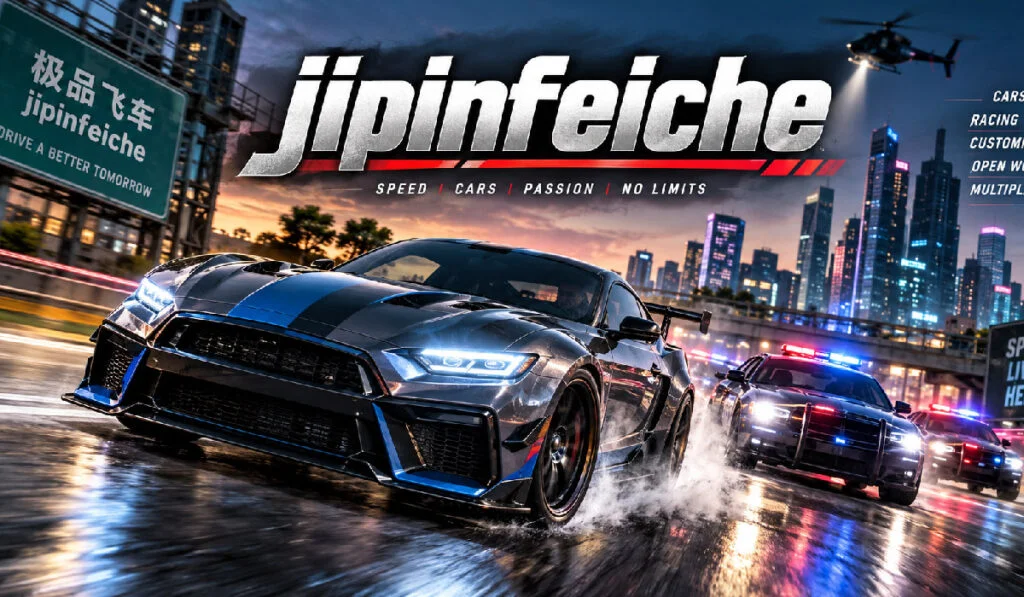
For decades, the name jipinfeiche has been synonymous with high-speed adrenaline, illicit street racing, and extreme car customization. As the premier arcade racing franchise in gaming history, it has defined how entire generations experience digital car culture. Whether you are outrunning aggressive police units in a heavily modified tuner car or tearing down canyon roads in a multi-million-dollar exotic, this series delivers unmatched thrills. Getting behind the wheel is easy, but truly mastering the asphalt requires deep knowledge of handling models, tuning mechanics, and pursuit evasion.
Quick Facts: The Jipinfeiche Legacy
- Genre: Arcade Street Racing
- Core Themes: Police pursuits, visual customization, underground car culture
- Key Driving Mechanic: Brake-to-drift handling and slipstreaming
- Vehicle Roster: JDM tuners, American muscle, European exotics, hypercars
- Signature Aesthetic: Neon underglow, widebody kits, dynamic weather effects
The Evolution of Jipinfeiche: From Classic Tracks to Open Worlds
The franchise has undergone several massive transformations since its inception. Early iterations focused strictly on closed-circuit racing featuring luxury exotic cars against breathtaking scenic backdrops. Players simply chose a supercar and raced against the clock or a single opponent. However, the true explosion of the jipinfeiche phenomenon occurred when the series pivoted to underground street culture.
The Golden Era of Street Culture
During the early 2000s, the franchise captured the zeitgeist of the import tuner scene. Closed circuits were replaced by sprawling, neon-soaked open cities. Players were no longer just driving cars; they were building them. The introduction of deep visual customization allowed racers to modify bumpers, spoilers, and rims, fundamentally changing how racing games approached player expression. This era solidified the brand’s identity, merging hip-hop and punk rock soundtracks with high-stakes illegal street racing.
The Modern Open-World Experience
Today, modern iterations blend cinematic storytelling with massive open-world environments. Powered by advanced game engines, current titles feature dynamic weather systems, day-and-night cycles that dictate gameplay, and hyper-realistic vehicle reflections. The modern jipinfeiche experience requires players to balance sanctioned daytime track events for cash with highly illegal, high-risk nighttime street races for reputation.
Top Jipinfeiche Games You Must Play
If you want to experience the very best this franchise has to offer, a few standout titles define the legacy. Here is a comparison of the most critically acclaimed entries.
| Game Title | Defining Feature | Best For | Overall Vibe |
| Most Wanted (2005) | Aggressive police AI & Blacklist | Pursuit lovers | Gritty, high-stakes, industrial |
| Underground 2 | Deepest visual customization | Tuner enthusiasts | Neon-lit, atmospheric, nostalgic |
| Hot Pursuit (2010) | Play as both cops and racers | Pure speed & gadgets | Scenic, cinematic, intense |
| Heat (2019) | Day/Night cycle mechanics | Modern progression | Miami-inspired, risky, vibrant |
| Unbound (2022) | Cel-shaded visual effects | Unique aesthetics | Street-art inspired, trendy |
Pro Actionable Advice: How to Dominate in Jipinfeiche
Winning races consistently requires more than just holding down the accelerator. The physics engine across recent titles relies heavily on a specific set of arcade mechanics that reward aggressive, stylish driving.
Mastering the Brake-to-Drift System
Modern jipinfeiche titles utilize a polarizing but thrilling “brake-to-drift” handling model. To execute the perfect corner, approach at high speed, quickly tap the brake (or handbrake for tighter hairpins), and immediately slam back onto the throttle while counter-steering. This breaks the rear traction and sends the car into a controlled slide. Maintaining this drift replenishes your nitrous bar rapidly. Do not over-steer; gentle analog stick adjustments will keep your speed high while sliding through the apex.
Strategic Nitrous Management
Novice players burn their nitrous entirely on straightaways. Expert racers use nitrous tactically to correct their racing line or rapidly exit a heavy drift. Saving a portion of your nitrous for the exact moment your tires regain grip after a corner will slingshot you past opponents. Furthermore, draft behind opponents on long straights to fill your boost meter before executing a slingshot pass.
Advanced Car Tuning Secrets
Your success in jipinfeiche heavily relies on what happens inside the garage. Throwing the most expensive engine parts at a car will not automatically make it a winner. You must tune for specific race types.
Grip vs. Drift Setups
The handling slider in your garage is your most powerful tool. Moving the slider toward “Grip” stiffens the suspension and adds downforce, making the car stick to the road. This is essential for tight city sprints with 90-degree turns. Conversely, sliding it toward “Drift” loosens the rear end and equips low-traction tires, which is mandatory for drift-specific events. Never bring a pure drift car to a high-speed highway sprint; you will lose control at top speed.
Engine Swapping and Forced Induction
Later games allow for complete engine swaps. A lighter car like a classic Mazda MX-5 becomes a hypercar-killer when fitted with a swapped V8. When choosing forced induction, understand the difference between superchargers and turbochargers. Superchargers provide immediate low-end acceleration, perfect for tight urban tracks with frequent stops. Turbochargers offer massive top-end speed boosts, ideal for long highway races.
Evading the Police Effectively
You cannot discuss jipinfeiche without mastering the art of the police pursuit. As your “Heat” level rises, law enforcement escalates from standard cruisers to heavy Rhinos, spike strips, and helicopters.
Utilizing Pursuit Breakers and Cooldowns
Never try to outrun high-level cops on a straight highway; their rubber-banding AI will catch you. Instead, head into dense urban areas with plenty of alleys, jumps, and tight corners. Heavy cop cars struggle with agility. Utilize jumps to lose them, as AI vehicles frequently crash upon landing. Once you break the line of sight, immediately cut your engine in a designated cooldown zone (like a shipping container or an alleyway) to drastically reduce your visibility radius.
The Art of the Rhino Dodge
At higher heat levels, armored Rhino units will charge you head-on. The common mistake is trying to swerve early. The Rhino AI will track your movement. Instead, maintain your heading until the very last second, then use a micro-burst of nitrous and a sharp steering flick to dodge. The massive weight of the Rhino prevents it from correcting its course in time.
Common Mistakes Beginners Make in Jipinfeiche
Even experienced racing game fans fall into specific traps when transitioning to this arcade franchise. Avoiding these pitfalls will save you millions in in-game currency.
- Ignoring the Starter Car’s Potential: Many players abandon their first car immediately. In reality, a fully upgraded starter car can often outperform mid-tier vehicles purchased later. Upgrade before you replace.
- Neglecting Defensive Driving: In street races, traffic is your biggest enemy. Fixating solely on the opponent ahead causes catastrophic crashes with civilian cars. Keep your eyes on the furthest point of the horizon to anticipate traffic patterns.
- Overusing the Handbrake: The handbrake bleeds an immense amount of speed. Reserve it strictly for U-turns and emergency corrections. For standard 90-degree city corners, the regular foot brake is more than sufficient to initiate a drift while maintaining momentum.
- Hoarding Cash at Night: In titles with risk-reward mechanics, getting greedy and staying out too long at maximum heat usually results in getting busted and losing all your earnings. Bank your cash frequently at safehouses.
Building the Ultimate Jipinfeiche Garage
A balanced garage is the key to conquering the late-game campaign. You cannot rely on a single hypercar for every event type. You must categorize your garage intelligently.
Tuners for the Corners
Japanese Domestic Market (JDM) tuners like the Nissan Skyline, Mitsubishi Lancer Evolution, and Honda Civic are lightweight and incredibly agile. Dedicate these vehicles to technical street races, drift events, and tight mountain passes. Their exceptional handling stats make them the best choice for weaving through dense city traffic.
Muscle for the Straights
American muscle cars (Mustangs, Camaros, Chargers) are heavy, difficult to corner, but possess terrifying straight-line acceleration. Build these cars specifically for drag races, highway sprints, and smashing through police roadblocks. Equip them with superchargers and heavy chassis reinforcements to maximize their brute force.
Exotics for High-Speed Sprints
European exotics (Lamborghini, Ferrari, Porsche) are your late-game investments. They offer the best balance of top speed and grip but are punishingly expensive to upgrade. Reserve these for high-stakes, long-distance races where top speed dictates the winner.
The Impact of Jipinfeiche on Real-World Car Culture
It is impossible to overstate how much this franchise influenced actual automotive trends. By licensing real-world aftermarket parts—from BBS rims to Rocket Bunny widebody kits—the games served as a virtual catalog for a generation of car enthusiasts. The deep customization engines taught millions of players the visual difference between a clean, stanced build and a track-focused time attack monster. The aesthetic of the early 2000s tuner scene was arguably kept alive and propelled into the mainstream largely through the success of these titles.
What’s Next for the Jipinfeiche Franchise?
As gaming hardware becomes more powerful, the future of the jipinfeiche series looks incredibly promising. Developers are continually pushing the boundaries of the Frostbite engine to deliver photorealistic graphics paired with highly stylized visual effects. Future iterations are expected to deepen the live-service multiplayer elements, allowing seamless transitions between solo campaigns and massive online car meets. We also anticipate even more granular tuning options, potentially letting players adjust specific gear ratios and tire pressures to cater to the hardcore sim-cade audience without alienating arcade purists.
Conclusion: Your Next Steps in Jipinfeiche
Mastering the chaotic, high-speed world of jipinfeiche requires patience, precision, and a deep understanding of vehicle mechanics. By applying the strategies outlined in this guide—from mastering the brake-to-drift physics and managing your nitrous, to outsmarting aggressive police AI and building a specialized garage—you will transform from a rookie street racer into an undisputed urban legend. Boot up your game, head into the garage, tweak your stance, and take back the streets. The apex is yours for the taking.