Dozuki Funding News: Fueling the Future of Frontline Manufacturing
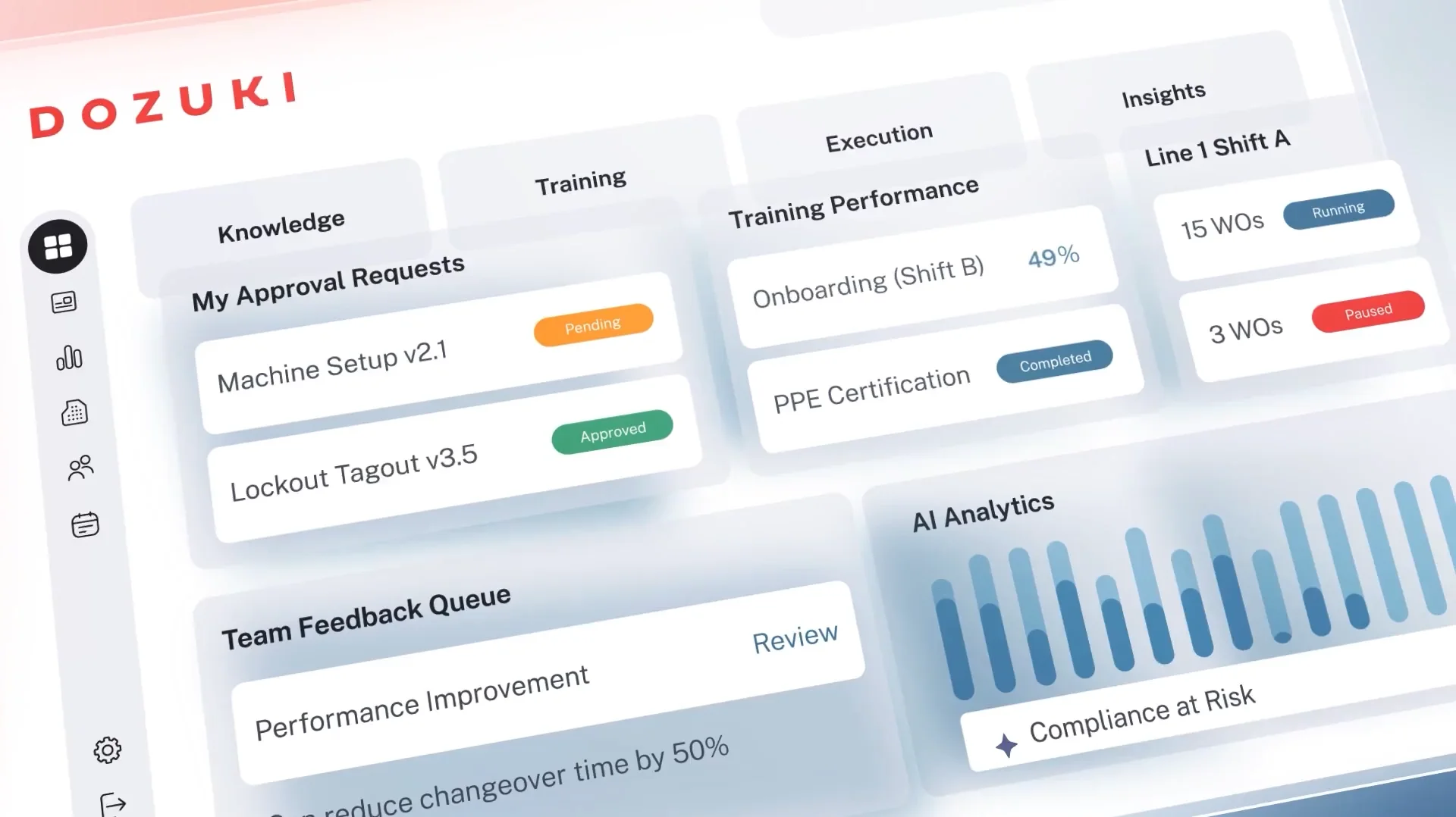
Tracking the latest dozuki funding news is essential for understanding the rapidly shifting landscape of industrial technology investments. Founded in 2011, Dozuki has grown into a leading connected worker software platform purpose-built for manufacturing shop floor operations. By capturing critical operational knowledge and standardizing workforce training, the company has successfully attracted significant private equity and venture capital attention.
With total funding reaching an estimated $16 million, Dozuki funding news is capitalizing on the urgent global demand for digital transformation within the manufacturing sector. This article breaks down the financial moves, key institutional investors, and what this massive capital injection means for the future of frontline productivity and industrial software.
The Catalyst: Marlin Equity Partners Takes a Majority Stake
The most pivotal moment in Dozuki’s capitalization history was its strategic growth investment from Marlin Equity Partners. This transaction marked a massive maturity milestone for the Mountain View-headquartered software company. Marlin Equity Partners, a global investment firm boasting over $7.7 billion in capital under management, structured the deal to aggressively accelerate Dozuki’s product innovation.
This partnership provides Dozuki with the deep operational resources needed to expand its multimedia authoring tools, document management systems, and language translation features. The backing from a major private equity player signals strong institutional confidence in B2B SaaS platforms specifically designed to upskill frontline workers. Vista Point Advisors acted as the exclusive financial advisor during this transformative sell-side M&A deal, ensuring the transaction aligned perfectly with Dozuki’s long-term vision.
At the time of the deal, Dozuki CEO and Co-Founder Eric Doster emphasized that Marlin’s financial support would help bring their industry-leading solutions to a broader customer base. Ryan Wald, a managing director at Marlin, mirrored this sentiment, noting that Dozuki’s platform is uniquely positioned to solve the ongoing labor shortages plaguing the manufacturing industry globally.
Strategic Corporate Backing: The Role of 3M Ventures
Beyond traditional private equity, Dozuki also secured highly strategic backing from 3M Ventures, the venture capital arm of the global manufacturing giant 3M. This corporate investment acts as a massive validator for Dozuki’s underlying technology. When a legacy industrial powerhouse like 3M invests in a frontline software tool, it highlights a broader industry mandate for internal digitization.
Corporate venture arms rarely invest purely for financial return; they invest for strategic operational alignment. 3M’s involvement proves that standardizing work instructions and capturing specialized tribal knowledge are now critical priorities for Fortune 500 manufacturers. This dual-pronged investment strategy gives Dozuki both the financial runway and the heavy-hitting industry credibility required to dominate the enterprise SaaS market.
Dozuki Capitalization at a Glance
Understanding a company’s financial backing requires looking closely at the raw data and structural support. Here is a clear breakdown of Dozuki’s current funding profile:
| Metric | Details |
| Total Funding Raised | $16 Million |
| Lead Institutional Investor | Marlin Equity Partners |
| Corporate Strategic Investor | 3M Ventures |
| Primary Deal Type | Private Equity / Majority Investment |
| Financial Advisor | Vista Point Advisors |
| Target Market | Manufacturing SaaS, Connected Worker |
| Company Headquarters | Mountain View, CA |
The Core Problem: Why Venture Capital is Betting on Connected Workers
Industrial software is no longer just about robotics, automation, or complex supply chain logistics. Investors are aggressively funding platforms that solve human-centric operational bottlenecks directly on the shop floor.
The Labor Shortage Crisis
Manufacturers face unprecedented workforce turnover and a looming skills gap as baby boomers retire. The National Association of Manufacturers frequently cites that millions of manufacturing jobs could go unfilled in the coming years due to this expertise exodus. Dozuki’s platform standardizes knowledge transfer, drastically cutting onboarding times for new hires. Speeding up time-to-productivity is exactly the metric venture capitalists look for when validating SaaS ROI.
Eradicating Tribal Knowledge
Decades of operational expertise often live solely in the minds of veteran machinists. Digital platforms extract this unstructured wisdom and document it into accessible, visual training modules. Once digitized, this knowledge becomes a scalable corporate asset rather than a localized operational risk.
Pandemic-Accelerated Adoption
Global supply chain disruptions exposed the extreme fragility of traditional frontline training. This forced companies to rapidly adopt connected-worker platforms to maintain agility during staff shortages. The pandemic definitively proved that paper manuals are a massive operational liability in dynamic, modern production environments.
How Dozuki is Deploying Its New Capital
Securing capital is only the first step; deploying it efficiently dictates long-term market leadership. Following the injection from Marlin Equity Partners, Dozuki funding news shifted its focus toward aggressive product expansion and global market penetration.
- Enhancing Multimedia Authoring: The company is doubling down on its core UX, allowing line workers to easily capture photos and videos of procedures directly from the floor.
- Advanced Language Translation: Manufacturing relies on a diverse, multilingual workforce. Dozuki is expanding its automated translation capabilities to ensure safety and quality standards are understood globally.
- Robust Reporting Analytics: Production managers demand actionable data. Capital is being poured into advanced analytics dashboards that track training completion, comprehension rates, and bottleneck identification.
- Global Market Expansion: With a strong foothold in North America, Dozuki is allocating funds to establish a much stronger presence across European and Asian manufacturing hubs.
The Role of Vista Point Advisors in the Transaction
Navigating a majority investment from a top-tier private equity firm requires expert financial orchestration. Vista Point Advisors, a boutique investment bank focusing strictly on middle-market tech companies, played a crucial role in brokering this deal. Their exclusive focus on sell-side M&A for founder-led SaaS businesses made them the ideal partner to maximize Dozuki’s valuation.
By running a highly competitive process, Vista Point Advisors ensured that Dozuki funding news leadership team found a financial partner who aligned with their specific operational ethos. Marlin Equity Partners was ultimately selected not just for their capital base, but for their extensive network of operational resources tailored to mature software companies. This strategic matchmaking is a prime example of how specialized investment banks are fueling the rapid growth of the industrial tech ecosystem.
Key Takeaways for Industrial Tech Investors
If you are analyzing B2B SaaS investments, Dozuki’s growth trajectory offers several highly actionable insights. Focusing exclusively on white-collar enterprise software ignores a massive, historically underserved market on the factory floor.
Look for specialized, purpose-built tools. Generic knowledge management systems fail spectacularly in loud, hazardous manufacturing environments. Dozuki won backing precisely because its interface is tailor-made specifically for shop floor operations and gloved hands.
Track the corporate parents and ecosystem players. The involvement of 3M Ventures highlights exactly how legacy industrial giants are using venture arms to digitize their own supply chains. Finally, do not ignore frontline ROI. Equipping operators with mobile, multilingual instructions directly impacts product quality, reduces material scrap, and massively boosts yield.
Why Standard Work Instructions Drive Valuation
To understand why investors poured millions into Dozuki, one must understand the fundamental philosophy of standard work. You simply cannot improve a process that you have not meticulously standardized. Standard work instructions serve as the absolute baseline of Lean manufacturing methodologies globally.
When a private equity firm evaluates a manufacturing software company, they look for software “stickiness.” Dozuki’s platform integrates so deeply into daily factory operations that ripping it out becomes nearly impossible for clients. This creates exceptionally high net revenue retention (NRR) rates. Because Dozuki directly ties its software to core continuous improvement efforts, the platform shifts from being a discretionary software expense to a mission-critical operational asset.
Common Mistakes Manufacturers Make with Digital Transformation
As capital flows into manufacturing tech, factory leaders often rush software deployments to keep pace. Throwing money at a problem rarely solves the underlying operational friction. Here are the most critical mistakes executives must avoid when implementing platforms like Dozuki.
Treating Software as a Magic Bullet
Buying a connected worker platform will not fix fundamentally broken operational processes. You must optimize and refine the actual procedure before you ever digitize it. Digitizing a bad process simply allows your workforce to execute poorly at a much faster rate.
Ignoring the End-User Experience
Process engineers often select software based on backend administrative features, entirely ignoring the operators who use it daily. If the mobile interface is clunky or requires excessive clicks, floor adoption will fail immediately. Software must constantly remove friction for the worker, not add to it.
Relying on Text-Heavy Instructions
Translating a 50-page text manual into a static PDF format on a tablet is not genuine digital transformation. You must leverage video, detailed macro photos, and modular micro-learning formats. Modern work instructions should look and feel significantly more like a modern consumer app than a rigid textbook.
Evaluating the ROI of Frontline SaaS Investments
For manufacturing CFOs evaluating the procurement of tools like Dozuki, understanding the return on investment goes far beyond basic software metrics. The financial impact is felt directly, and measurably, on the production line.
First, consider the drastic reduction in onboarding costs. When new hires can follow intuitive, video-based guides, they reach full productivity weeks faster than those shadowing senior staff. This severely reduces the burden on your most experienced workers, allowing them to focus strictly on production metrics rather than informal training.
Second, analyze the immediate decrease in scrap and rework. Standardized, hyper-clear procedures actively prevent the micro-errors that lead to defective products hitting the shipping dock. Finally, factor in operational compliance and audit readiness. Having a digitized, timestamped record of who completed which specific training module makes passing strict ISO audits significantly cheaper, faster, and far less stressful for plant managers.
The Competitive Landscape for Connected Worker Software
Dozuki does not operate in a vacuum. The connected worker space has become fiercely competitive as immense funding floods the industrial sector. Understanding the competitive landscape is vital for both enterprise software buyers and prospective tech investors.
Companies in this space range from legacy Learning Management Systems (LMS) to highly complex digital twin providers. Dozuki distinguishes itself by maintaining a laser focus on standard work instructions and continuous improvement methodologies. Instead of trying to be an overly broad, all-in-one corporate HR platform, Dozuki excels entirely at documenting exact procedures to permanently eliminate variations in product quality.
Competitors often struggle because they build horizontal platforms intended for any general industry. By remaining hyper-verticalized strictly for manufacturing operations, Dozuki ensures its product roadmap aligns perfectly with the daily, gritty realities of production managers and quality engineers. This deeply specialized approach is exactly what attracted Marlin Equity Partners to execute a buyout over other generic SaaS targets.
Future Outlook and Upcoming Capital Moves
The manufacturing software ecosystem is consolidating rapidly. As private equity firms look to build comprehensive industrial tech portfolios, companies like Dozuki are prime candidates for further M&A activity or subsequent venture rounds.
Expect to see platforms in this space begin aggressively acquiring smaller, niche AI startups to bolster their native capabilities. Predictive analytics, augmented reality (AR) overlay work instructions, and AI-driven instant translation will become standard table stakes over the next three years. Dozuki’s current capitalization provides the necessary war chest to either build these advanced features internally or pursue strategic add-on acquisitions to maintain its robust competitive moat.
Final Thoughts on the Connected Worker Movement
Keeping a close watch on ongoing dozuki funding news reveals broader macroeconomic trends in how capital is actively shaping the future of global manufacturing. As labor shortages persist and global supply chains demand even greater operational resilience, the reliance on human-centric software will only intensify.
Expect connected-worker platforms to command even higher valuations in upcoming capital raises across the entire sector. For investors, manufacturers, and technologists alike, the evolution of Dozuki serves as a perfect, highly visible blueprint for how targeted capital can transform the oldest industry in the world. Modernizing the shop floor is no longer an optional luxury; it is an absolute necessity for survival in the modern industrial landscape.