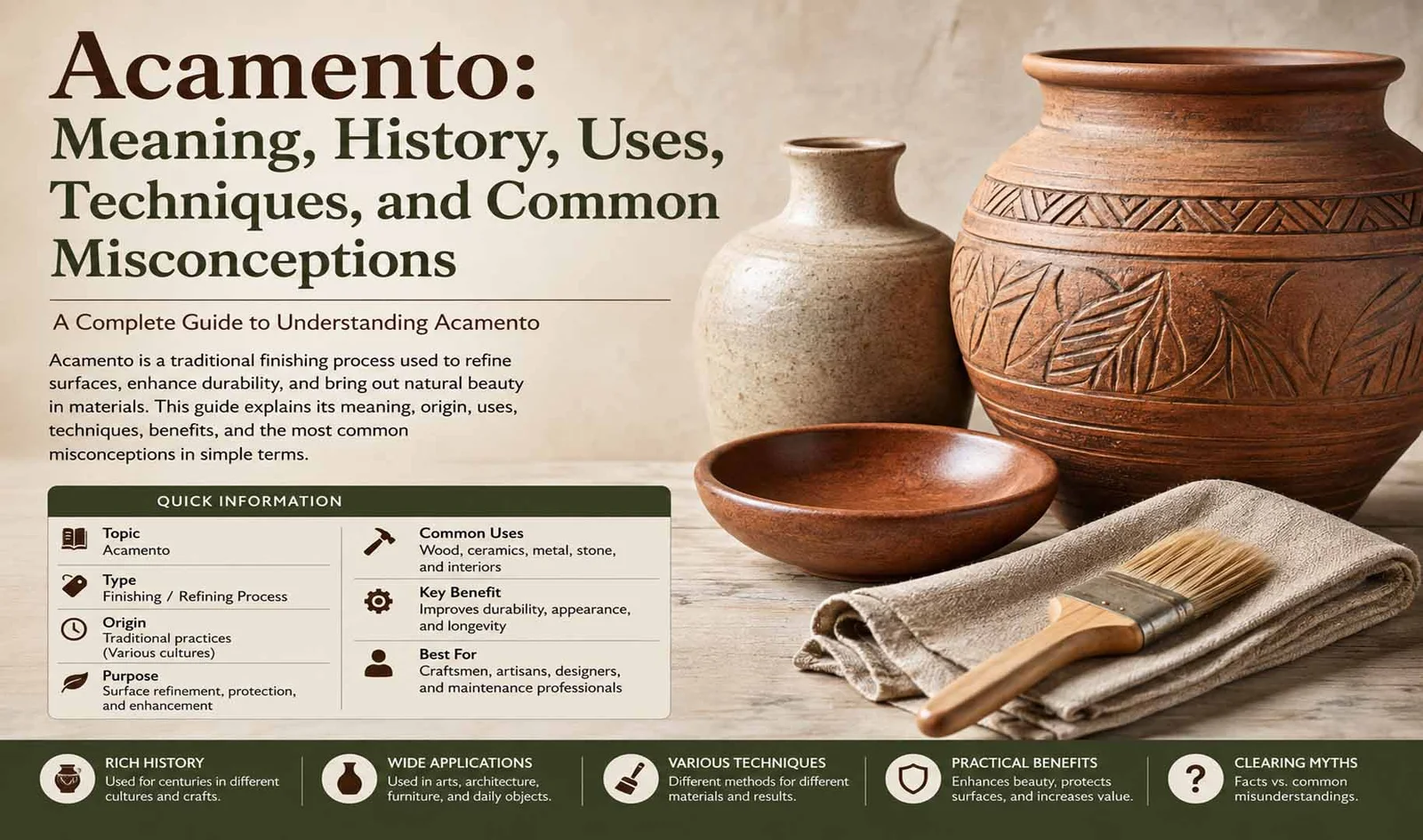
Have you ever wondered what separates a merely functional project from a true masterpiece? The answer almost always lies in acamento. Derived from the traditional Portuguese concept of acabamento, acamento represents the critical final stage of refinement, finishing, and completion.
Whether you are launching a complex software application, constructing a residential building, or designing a user interface, this finishing touch is what guarantees durability, functionality, and aesthetic perfection. Too many creators rush through the final ten percent of their work, eager to simply cross the finish line.
Embracing this philosophy ensures that no detail is overlooked, transforming basic structural work into a premium experience. This comprehensive guide breaks down everything you need to know about this transformative process, offering actionable insights for professionals across all major industries.
What Exactly is Acamento? Understanding the Core Concept
To fully grasp this concept, you must look beyond the basic idea of task completion. It is not simply reaching the end of a checklist; it is the deliberate, meticulous process of polishing a product until it is truly ready for the end user. While structural work provides the necessary foundation, the finishing phase delivers the final, tangible value.
In the realm of physical construction, it is the smooth, flawless plaster, the highly protective weather sealant, and the perfectly aligned ceramic tiles. In digital product design, it involves seamless menu navigation, heavily optimized page loading speeds, and rigorous, uncompromising bug testing.
The core philosophy of this process dictates that a product is only as strong, and only as valuable, as its weakest finishing detail. By focusing relentlessly on micro-interactions, edge cases, and surface-level perfection, creators protect the underlying hard work they have already invested. Ignoring this critical phase almost always results in a functional but deeply frustrating user experience.
The Difference Between Basic Completion and Acamento
Many professionals dangerously confuse the act of finishing a project with applying proper final refinement. A house with four walls and a sturdy roof is technically built, but it is not a welcoming home until the interior details are completely executed.
When a team simply aims for completion, they prioritize baseline functionality. When a team aims for true refinement, they prioritize the entire user journey. Here is a quick comparison to illustrate the stark difference between the two approaches:
| Feature | Basic Completion | True Acamento |
| Primary Focus | Functionality and raw structure | Aesthetics, durability, and user experience |
| Creator Mindset | “It works and the deadline is met.” | “It works flawlessly and looks incredible.” |
| Software Example | Backend code is written and compiles | UI is polished, bugs fixed, loading optimized |
| Physical Example | Raw wood is cut, glued, and assembled | Surface is sanded, stained, and sealed |
| End Result | Usable but unrefined and rough | Professional, premium, safe, and durable |
Why Acamento Matters Across Major Industries
The physical and digital application of this finishing philosophy varies wildly depending on your specific field. However, the overarching end goal remains exactly the same: elevating the final output to meet premium market standards.
Software Development and UI/UX Design
In the highly competitive tech industry, a newly launched software feature can possess brilliant backend coding and revolutionary architecture. However, if the user interface remains clunky and confusing, users will abandon the platform immediately.
Applying this refinement in software development means executing rigorous quality assurance protocols. It involves checking visual consistency across every single page, reducing unnecessary clicks to streamline navigation, and refining technical documentation so that new users can onboard smoothly.
A well-finished digital product builds immediate, unshakable trust with the user. It signals that the developers care deeply about the user’s time and digital safety. Furthermore, search engines frequently reward well-optimized, highly polished websites with better organic rankings. A site that loads quickly and offers a seamless mobile experience will naturally outrank a hastily published competitor.
Architecture and Civil Construction
Builders and architects rely heavily on the final finishing phase to physically protect their multimillion-dollar structures. Exposed concrete, untreated wood, and bare drywall degrade rapidly when exposed to the elements. Quality final finishing provides a vital, impenetrable shield against moisture penetration, UV ray degradation, and daily mechanical wear and tear.
Furthermore, this stage dictates the entire aesthetic character and mood of a living space. It turns raw, industrial materials into comfortable, inviting, and acoustically balanced environments.
High-quality flooring, perfectly applied paint, and robust door fixtures are what buyers actually notice and pay for. In commercial real estate, a flawlessly finished lobby sets the tone for corporate negotiations and immediately establishes a sense of prestige.
Woodworking and Advanced Manufacturing
A custom-built mahogany dining table is functionally useless if its rough edges give the owner splinters. The physical act of acamento in fine woodworking involves progressive, meticulous sanding, applying premium protective oils, and allowing ample time for the finish to cure properly in a dust-free environment.
This detailed process not only highlights the stunning natural beauty and unique grain of the wood but also ensures the furniture can easily withstand decades of heavy daily use. It prevents water rings, mitigates friction damage, and ensures structural longevity.
The Evolution of Finishing Techniques in the Modern Era
Historically, surface refinement was a grueling, labor-intensive process reserved only for luxury goods. Master craftsmen would spend weeks hand-polishing wooden veneers or manually smoothing stone facades for cathedrals and palaces. Today, advanced manufacturing and digital tools have democratized this level of quality.
Automated sanders, laser-guided cutting tools, and UV-cured chemical coatings allow modern builders to achieve flawless surfaces in a fraction of the time. In the digital realm, automated software testing frameworks and real-time user heatmaps provide developers with instant feedback on interface friction.
Despite these technological advancements, the underlying mindset remains entirely unchanged. Tools only accelerate the workflow; they do not replace the critical human eye required to judge true quality. A machine can apply a protective topcoat, but a skilled professional must still dictate the exact specifications, environmental conditions, and final aesthetic goals of the project.
Quick Facts: The Hidden Business Benefits of the Finishing Phase
Taking the time to perfect the final ten percent of a project is not just an artistic pursuit; it is a highly profitable business strategy.
- Exponentially Increases Market Value: Products displaying high-quality final refinement consistently command premium market prices compared to their unpolished competitors.
- Dramatically Reduces Maintenance: A proper protective surface finish greatly lowers the long-term cost of repairs and prevents premature material degradation.
- Boosts Digital User Retention: In digital spaces and applications, a flawlessly polished user interface prevents user frustration, directly reducing costly customer churn rates.
- Enhances Consumer Safety: Smooth edges, secure structural fixtures, and highly tested non-slip floor coatings directly prevent devastating accidents and potential lawsuits.
A Practical, Step-by-Step Guide to Mastering Acamento
Implementing a flawless finishing phase requires a highly structured, deliberate approach. You cannot simply hastily apply a topcoat of paint or run a quick automated software test and expect premium excellence. Follow these sequential steps to guarantee results.
1. Meticulous Initial Preparation
The single most critical step actually happens long before the actual finishing materials are applied. In physical construction projects, this means aggressively cleaning, leveling, sanding, and removing all microscopic dust particles from the surface. In digital software projects, it means reviewing the underlying code structure, conducting preliminary user testing, and establishing a clean staging environment. A final finish will only ever be as good as the raw surface beneath it.
2. Selecting the Exact Right Tools and Materials
Using incompatible chemical products or outdated testing frameworks is a guaranteed recipe for total disaster. You must ensure your chemical sealants perfectly match your porous materials. Likewise, ensure your software testing tools perfectly match your specific tech stack. Always thoroughly research manufacturer specifications, read technical data sheets, and consult industry standards before proceeding to the next step.
3. The Deliberate Application Phase
Execute the final finishing touches with extreme patience and a steady hand. Whether you are applying a thick polyurethane coat to a custom hardwood floor or painstakingly adjusting the mobile typography on a high-converting landing page, rush work will immediately show its ugly face. Always work in highly controlled, well-lit environments to avoid unwanted contamination, dust, or easily preventable human errors.
4. Final Review and Rigorous Quality Assurance
The refinement process does not officially end until a rigorous, uncompromising inspection takes place. Test the physical or digital product exactly as the most demanding end user would. Push it to its absolute limits. If you find minor friction points, slightly rough edges, or subtle visual inconsistencies, you must swallow your pride and return immediately to the application phase for further refinement.
Common Mistakes to Avoid During the Acamento Process
Even highly experienced, well-paid professionals frequently stumble during the crucial final refinement stage. Avoid these massive, project-killing errors to ensure your hard work shines brightly.
- Rushing the Essential Preparation: Applying expensive paint over a dusty, unwashed wall, or launching enterprise software without fully testing the staging environment guarantees a catastrophic failure. Remember that the preparation phase completely dictates the lifespan and quality of the finish.
- The Trap of Over-finishing: Sometimes, less truly is more. Adding far too many unnecessary visual animation effects to a corporate website or over-polishing a beautiful, rustic piece of reclaimed wood destroys its natural, intended appeal. Know exactly when to stop.
- Ignoring the Actual User Environment: A beautiful finish must survive its actual, real-world use case. A stunning high-gloss floor finish is entirely useless if it becomes dangerously slippery the moment it rains. Always meticulously match the specific finishing technique to the harsh realities of the real-world environment.
- Treating the Finish as an Afterthought: Budgeting ninety-five percent of your total project timeline for basic construction and a mere five percent for finishing is a massive, amateur mistake. The final refinement phase often requires just as much dedicated time, budget, and specialized resources as the initial building phase.
Frequently Asked Questions About Acamento
Is this concept a specific retail product, software brand, or registered trademark?
No, it is not. It is a broad, overarching conceptual framework that describes the final stage of refinement, finishing, and ultimate completion of any given project. It is definitely not a specific brand, physical tool, or proprietary technology.
How exactly does it differ from the traditional Portuguese word acabamento?
The modern concept is directly inspired by acabamento, which literally translates from Portuguese to finishing, completion, or workmanship. In modern English online usage and digital strategy circles, this slightly adapted term has rapidly evolved into a broader philosophical approach. It now represents uncompromising quality assurance and final refinement across multiple modern disciplines, especially regarding digital product design and software deployment.
Can small local businesses actually benefit from adopting this premium philosophy?
Absolutely. Implementing a remarkably strict finishing standard helps small businesses punch far above their weight class. A highly polished, bug-free e-commerce website or a perfectly finished physical retail product builds immense, undeniable brand trust. This unwavering commitment to quality allows small, independent companies to successfully compete head-to-head with massive, well-funded global corporations.
Conclusion: Elevating Your Craft
Mastering the intricate art of acamento is undoubtedly the single most effective way to elevate your professional work from functionally average to truly exceptional. It requires immense patience, a highly trained eye for minute details, and an absolute refusal to ever settle for work that is merely “good enough.”
Whether you are aggressively refining complex backend software code, meticulously polishing custom-built mahogany furniture, or completing a massive commercial real estate renovation, the final details always dictate the ultimate success and profitability of the entire project. By wholeheartedly embracing the demanding principles of acamento, you guarantee that your final product is highly durable, visually stunning, and perfectly tailored to delight the end user. Never underestimate the immense, transformative power of a perfect finish; it is the ultimate signature of a true professional.