Understanding the Lemonway Funding Rounds Amount and Valuation Journey
Tracking the financial trajectory of European fintech platforms requires a deep dive into their capital structure. Analyzing the exact lemonway funding rounds amount provides a fascinating window into how B2B payment processors scale within a highly regulated market. Founded in 2007, this Paris-based payment institution spent its first decade entirely bootstrapped before taking on institutional venture capital.
Today, Lemonway is a powerhouse in the European marketplace economy, handling complex payment flows for over 1,400 digital platforms. Their transition from a self-funded startup to a venture-backed giant illustrates the immense capital required to maintain regulatory compliance and build proprietary API infrastructure. By examining their capitalization table, financial analysts and fintech founders can extract valuable lessons on scaling pan-European payment networks.
Lemonway Financial Profile: Quick Facts
| Metric | Financial Data |
| Total Funding Raised | $52.3 Million |
| Primary Industry | FinTech, SaaS, Payment Processing |
| Key Institutional Investors | Toscafund, Breega, Speedinvest, UNIQA |
| Major Venture Rounds | Series A (€10M), Series B (€25M) |
| Regulatory Status | Regulated by ACPR (Banque de France) |
| Core Market | Digital Marketplaces & Crowdfunding |
The Bootstrapped Era: 2007 to 2017
For its first ten years, Lemonway operated without major institutional capital. The founders relied on organic revenue growth and small angel investments totaling around $125,000 in 2009 and 2010. This lean approach forced the company to build a profitable, highly efficient operational model early on.
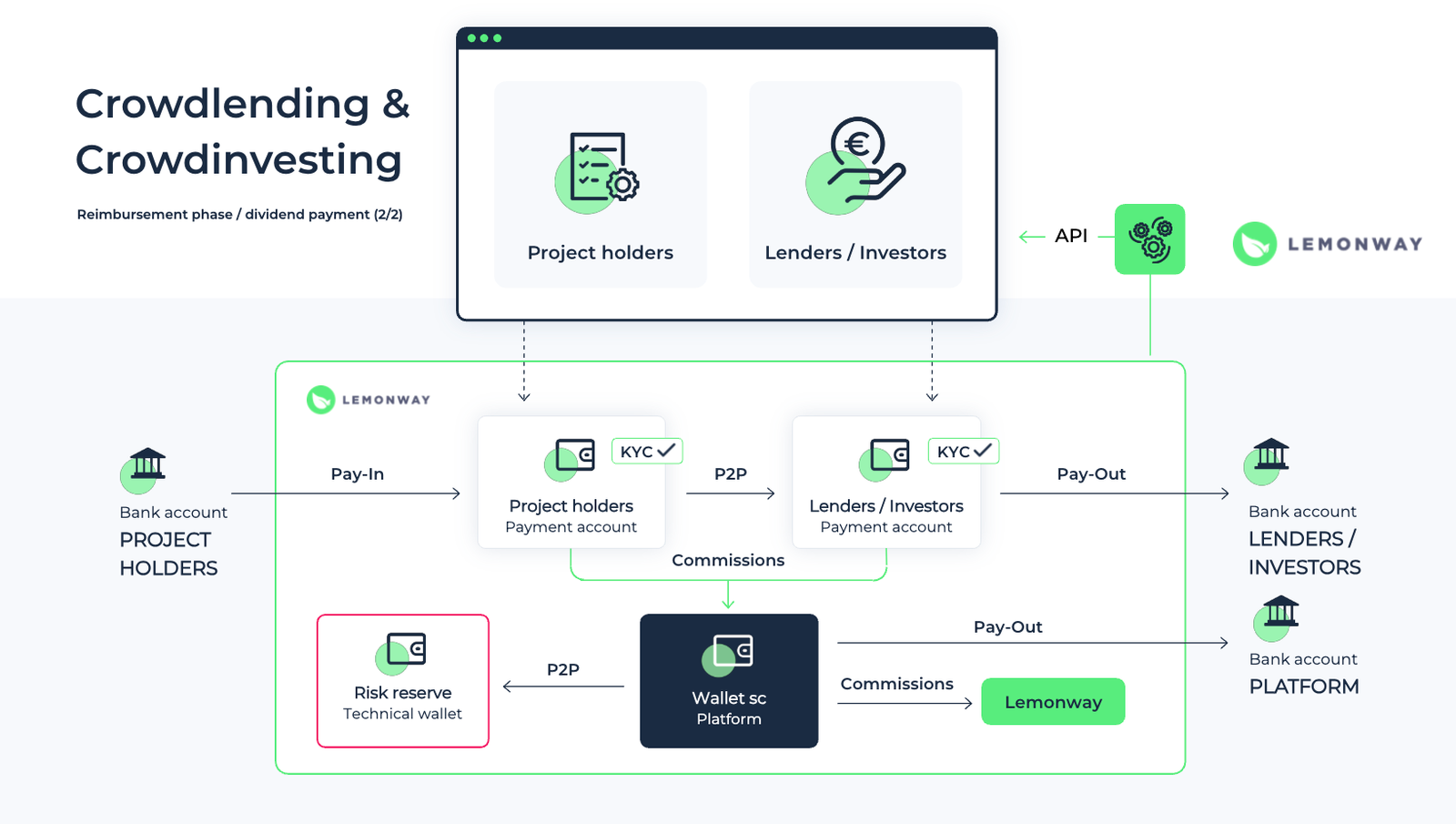
By 2012, Lemonway had officially secured its status as a payment institution under the ACPR (Autorité de Contrôle Prudentiel et de Résolution). Securing this license without a massive venture capital war chest is exceptionally rare in modern fintech. It allowed the company to begin processing third-party payments, managing digital wallets, and ensuring KYC (Know Your Customer) compliance for growing marketplaces.
Their self-financed model culminated in a breakout year in 2017. Lemonway processed €1.4 billion in inflows and outflows, generating €11 million in turnover. Reaching this milestone while maintaining a positive net result proved the viability of their business model, making them a prime target for institutional investors.
Analyzing the Lemonway Funding Rounds Amount
Once the company decided to accelerate its pan-European expansion, it turned to the venture capital markets. The resulting lemonway funding rounds amount reflects a highly strategic, phased approach to capital injection rather than reckless hyper-funding.
The €10M Series A Round (July 2018)
In July 2018, Lemonway announced its first major institutional funding round, raising €10 million (approximately $11.7 million). This Series A round was led by Breega Capital, a prominent European venture fund, with strategic participation from Speedinvest.
The core objective of this capital was aggressive geographic expansion. Lemonway aimed to solidify its strongholds in France, Spain, and Italy while aggressively expanding into the United Kingdom and Germany. The funding also allowed the company to scale its workforce, transitioning from 80 employees to a significantly larger engineering and compliance team.
This round marked a turning point for the company’s board governance. Executives from both Breega and Speedinvest joined the Lemonway Supervisory Board. Their inclusion brought deep fintech expertise, helping the founders navigate the complex European regulatory landscape.
The €25M Series B Mega-Round (October 2019)
Just over a year later, Lemonway secured a massive €25 million ($27.6 million) Series B investment. This round was exclusively backed by Toscafund Asset Management, a London-based specialist financial services investor. It represented Toscafund’s first private equity investment in the French market, highlighting Lemonway’s unique value proposition.
This capital injection was designed to elevate the company’s technological infrastructure. A significant portion of the funds went toward developing modular, proprietary APIs to make integration seamless for massive enterprise marketplaces. Lemonway also used this capital to forge deeper integrations with a dozen European banks, allowing client platforms to maintain existing banking relationships while utilizing Lemonway’s ledger technology.
At the time of this round, Lemonway’s payment flow was projected to surpass €3 billion annually. The Series B funding acted as an accelerant, ensuring their server architecture and compliance teams could handle the exponential increase in transaction volume.
Later Stage VC and Strategic Adjustments (2020–2022)
Following the Series B, Pitchbook data reveals additional Later Stage VC activity, including a $12.9 million injection in October 2022. These later rounds emphasize a focus on sustaining growth through turbulent macroeconomic conditions.
Unlike consumer-facing fintechs that burn cash on customer acquisition, Lemonway’s later funding focused on enterprise resilience. The capital ensured absolute compliance with evolving European PSD2 (Payment Services Directive 2) regulations. Maintaining strict regulatory compliance requires immense ongoing capital, making these strategic top-ups essential for long-term survival.
Key Investors Fueling the Growth
Understanding the total lemonway funding rounds amount requires looking closely at the specific investors who provided the capital. Each firm brought strategic advantages far beyond just monetary backing.
- Breega Capital: As the lead investor in the Series A, Breega brought deep digital tech and fintech operational experience. Their investment thesis focuses strongly on European tech, aligning perfectly with Lemonway’s pan-European goals.
- Speedinvest: Based in Vienna, this early-stage fund has a dedicated fintech division. Their involvement gave Lemonway a strategic foothold and localized expertise to push into the DACH (Germany, Austria, Switzerland) region.
- Toscafund Asset Management: As a specialist in financial services, Toscafund understood the granular complexities of banking licenses, API payment gateways, and ledger management. Their €25M backing provided institutional credibility when Lemonway began targeting major corporate accounts.
Strategic Capital Allocation: Where the Money Goes
Raising over $50 million comes with strict board expectations regarding capital deployment. Lemonway utilized its funding across three critical pillars to build a sustainable economic moat.
1. Proprietary API and Technological Infrastructure
Marketplaces require frictionless payment integration. Lemonway invested heavily in developer-friendly, modular APIs. This allows complex platforms—like crowdfunding sites or B2B supply chains—to automate pay-ins, split payments, and vendor payouts instantly. Modernizing this infrastructure prevents system outages during high-volume trading days.
2. KYC, AML, and Regulatory Compliance
Acting as a third-party payment collector means shouldering immense legal liability. Lemonway issues millions of e-wallets in real-time, necessitating automated Know Your Customer (KYC) and Anti-Money Laundering (AML) checks. Venture capital allowed them to integrate advanced identity verification software, reducing manual review bottlenecks and speeding up merchant onboarding.
3. Geographic Expansion and Talent Acquisition
Capital directly translates to physical presence. By deploying funds into local sales and legal teams in the UK and Germany, Lemonway bypassed the sluggishness of remote, cross-border sales. They expanded their workforce beyond 180 employees, prioritizing senior compliance officers and enterprise sales directors who could land massive accounts like the French Football Federation.
The Competitive Landscape: How Lemonway Stacks Up
To fully grasp the impact of the Lemonway funding rounds amount, it must be contextualized against their direct competitors. The European marketplace payment sector is notoriously cutthroat.
| Competitor | Core Focus | Target Market |
| Lemonway | Marketplaces, Crowdfunding, B2B platforms | Primarily Europe (France, Spain, Germany) |
| Mangopay | E-commerce marketplaces, C2C platforms | Global with heavy European focus |
| Stripe Connect | Broad software platforms, global marketplaces | Worldwide |
| Adyen for Platforms | Enterprise retail, massive global marketplaces | Worldwide |
While Stripe and Adyen possess multi-billion dollar valuations, Lemonway differentiates itself through deep localization. Their entire architecture is built specifically for European regulatory nuances. They partner directly with local European banks, offering a white-glove compliance service that global behemoths often automate too aggressively.
This hyper-focused strategy means Lemonway doesn’t need to raise billions to compete. Their $52.3M total funding is highly efficient, allowing them to dominate a specific, highly profitable niche rather than fighting a global war of attrition.
The Regulatory Moat of European FinTech
In the fintech sector, regulatory licenses are just as valuable as the underlying technology. Securing and maintaining these licenses requires significant financial backing.
Lemonway’s status as a regulated payment institution by the French ACPR allows them to operate freely across the European Economic Area via passporting rights. However, the introduction of PSD2 drastically changed how marketplaces handle money. Platforms can no longer touch funds directly without strict licenses; they must use a regulated third party.
This regulatory shift was the primary catalyst for Lemonway’s hypergrowth. By securing their venture capital precisely when PSD2 enforcement ramped up, they positioned themselves as the immediate, plug-and-play solution for non-compliant platforms. The funding ensured they had the server capacity and customer success teams ready to capture this massive influx of forced market demand.
Common Mistakes to Avoid in FinTech Fundraising
Founders looking at Lemonway’s success can extract several actionable insights regarding capitalization. Many fintech startups fail because they fundamentally misunderstand how to sequence their funding.
First, do not raise massive institutional capital before securing regulatory clarity. Lemonway bootstrapped for ten years, securing their ACPR license and proving unit economics before taking Series A money. Raising millions while still fighting for basic operating licenses leads to severe equity dilution.
Second, avoid prioritizing customer acquisition over compliance infrastructure. In the B2B payments space, a single AML failure can result in license revocation. Lemonway spent their Series B heavily on compliance tech and bank partnerships, ensuring their foundation was bulletproof before scaling sales.
What the Future Holds for Lemonway
Looking forward, Lemonway is uniquely positioned in the European market. As B2B marketplaces continue to digitize—moving away from traditional invoicing toward split-payment digital platforms—the demand for complex ledger management will only increase.
While they have not yet announced a Series C or an impending IPO, their current capital structure appears highly sustainable. By focusing on enterprise clients with massive transaction volumes, they generate predictable, recurring revenue through transaction fees. Should they seek an exit or an additional capital injection, their established profitability metrics will command a premium multiple.
Conclusion
Analyzing the complete lemonway funding rounds amount reveals a masterclass in strategic fintech growth. By raising a total of $52.3 million across highly targeted venture rounds, Lemonway successfully transformed from a bootstrapped French startup into a pan-European financial backbone. Their deliberate allocation of capital toward proprietary API development, localized regulatory compliance, and strategic geographic expansion proves that in the complex world of marketplace payments, efficiency and deep regional expertise frequently outmaneuver sheer capital volume.