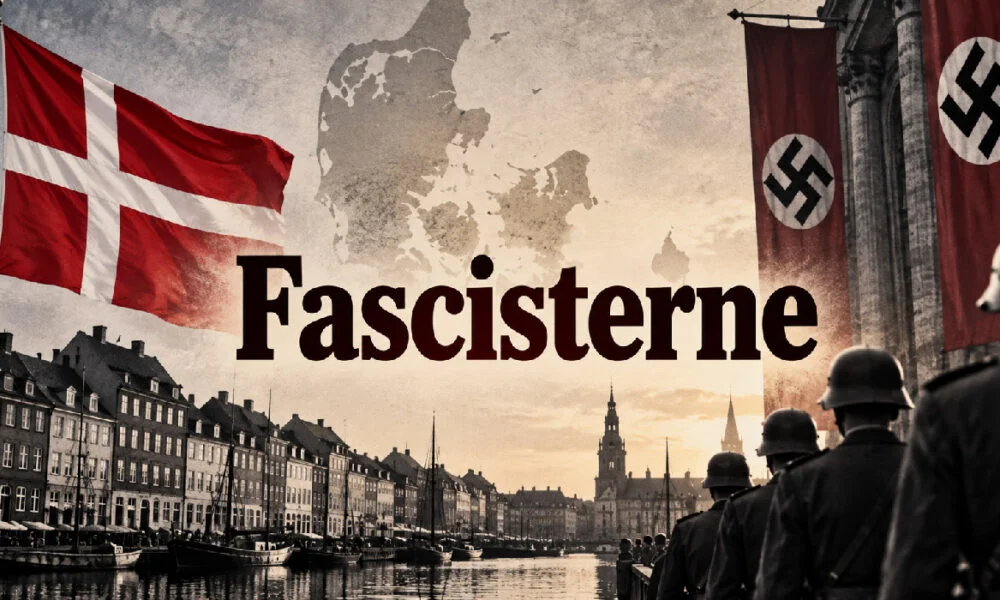
When reading historical texts, Scandinavian political analyses, or World War II archives, you will encounter the term fascisterne. Originating as the Danish definite plural noun for “the fascists,” fascisterne refers specifically to the individuals, political groups, and militant movements that embraced fascist ideology during the twentieth century.
| Aspect | Key Detail |
| Target Term | Fascisterne |
| Language & Grammar | Danish definite plural noun, translating directly as “the fascists” |
| Grammatical Base | Derived from fascist (singular) and fascisme (ideology) |
| Historical Origin | Early 20th-century Italy (fascisti) under Benito Mussolini |
| Etymological Root | Latin fasces (a bundle of rods bound around an axe symbol) |
| Core Ideology | Authoritarian ultranationalism, totalitarian state control, militarism |
| Regional Significance | Relevant in European history, WWII studies, and Danish occupation archives |
Understanding what fascisterne signifies requires looking beyond basic dictionary definitions. It demands a close examination of interwar European history, totalitarian state structures, and the collapse of democratic institutions.
By analyzing both the linguistic mechanics and the historical realities surrounding fascisterne, researchers gain critical clarity on how authoritarian movements rise, consolidate power, and impact society.
What Does Fascisterne Mean? Linguistic and Grammatical Roots
To analyze fascisterne accurately, one must first understand its linguistic structure in Scandinavian languages. In Danish, definite articles are attached directly to the end of nouns as suffixes rather than placed before them as separate words.
The grammatical progression follows a distinct pattern:
- Fascist: A single individual who supports fascism (singular indefinite).
- Fascisten: The specific individual fascist (singular definite).
- Fascister: Multiple fascists (plural indefinite).
- Fascisterne: The specific group of fascists (plural definite).
- Fascisme: The overarching political ideology of fascism.
This distinction between ideology and individuals is vital for precise analytical writing. While fascisme describes theoretical doctrines and governmental models, fascisterne refers directly to the people, party members, and paramilitary forces acting upon those ideas.
Translators and historians encounter fascisterne when reading Danish political history, news coverage, and academic literature regarding European dictatorships. Recognizing this grammatical structure prevents readers from mistaking the term for a specific political party title.
Historical Origins of Fascisterne in Interwar Europe
The historical movement represented by fascisterne began in Italy following the end of the First World War. Widespread economic distress, fear of communist revolution, and social instability created fertile ground for radical political movements.
Benito Mussolini founded the Fasci Italiani di Combattimento in 1919, drawing upon the Latin concept of fasces—an ancient Roman symbol representing unified strength and state authority. His followers, known in Italian as fascisti, became the direct prototype for what Danish texts label as fascisterne.
Following the 1922 March on Rome, Mussolini consolidated power and dismantled Italy’s democratic institutions. He established a single-party state that outlawed opposition parties, censored the press, and forced civil society under strict regime control.
The political methods introduced by Italian fascisterne quickly spread across the European continent. Authoritarian leaders in Germany, Spain, Hungary, and Romania adapted these paramilitary tactics, propaganda techniques, and state-centric economic models to fit their domestic ambitions.
Key Characteristics and Pillars of Fascisterne
While fascist movements varied across national borders, historical fascisterne shared core structural traits that defined their political regimes. Identifying these traits helps distinguish true fascist organizations from general military dictatorships or traditional conservative autocracies.
- Extreme Ultranationalism: National identity is elevated above individual rights, religious affiliation, or class solidarity. Citizens are expected to dedicate their lives entirely to the glory and expansion of the nation.
- Totalitarian Dictatorship: Rejection of liberal democracy, parliamentary debate, and multi-party elections. Power is concentrated in an absolute executive backed by secret police forces.
- Cult of Leadership: The state revolves around a supreme leader (Il Duce or Der Führer) who is portrayed as the infallible embodiment of the national will.
- Militarism and Paramilitarism: Uniformed street combatants, youth movements, and military parades are utilized to intimidate political opponents and instill regimented discipline.
- State Corporatism and Suppression: Independent labor unions and striking are banned.
These five pillars enabled fascisterne to mobilize entire populations into compliant war economies. The eventual concentration of power without democratic checks led directly to widespread human rights abuses and global conflict.
Analyzing Fascisterne vs. Related Political Ideologies
A common issue in historical analysis is treating all authoritarian regimes as identical. To maintain academic rigor, historians separate fascisterne from other mid-twentieth-century political systems through clear comparative frameworks.
| Feature / Trait | Italian Fascisterne | Nazi Germany (National Socialism) | Military Dictatorship | Liberal Democracy |
| Primary Focus | Absolute State Power & Nation | Racial Purity & Biological Hierarchy | Order, Security & Rule by Officers | Individual Liberty & Human Rights |
| Core Leadership | Single Charismatic Civilian Party Leader | Dictatorial Leader Driven by Racial Myth | Military Junta or General Staff | Elected Representatives & Prime Minister |
| Mass Mobilization | Extensive Youth & Civilian Movements | Totalitarian Party Integration | Low; Citizen Passivity Preferred | High Voluntary Political Participation |
| Economic System | State Corporatism & Managed Capitalism | Rearmament Corporatism & Exploitation | Mixed / Oligarchic Capitalist Control | Free Market & Regulated Private Enterprise |
| Stance on Pluralism | Complete Suppression of Opposition | Total Destruction & Systematic Elimination | Severe Restriction of Political Parties | Guaranteed Multi-Party System |
While German National Socialism shared many authoritarian techniques with Italian fascisterne, it prioritized racial ideology and biological anti-Semitism above pure statism. Conversely, traditional military dictatorships sought to suppress mass political participation rather than actively mobilizing citizens into public rallies and party organizations.
Fascisterne in Scandinavian and Danish History
Although fascism was predominantly centered in Southern and Central Europe, its political influence extended into Scandinavia during the 1930s. Domestic fascist political parties formed in Denmark, most notably the Danmarks Nationalsocialistiske Arbejderparti (DNSAP) led by Frits Clausen.
These Danish sympathizers closely emulated German and Italian propaganda, uniforms, and organizational structures. However, domestic fascisterne failed to capture significant electoral support prior to World War II, remaining fringe political movements without direct governmental power.
The political reality altered dramatically on April 9, 1940, when Nazi Germany invaded Denmark. During the occupation, local Danish fascisterne collaborated with German occupation forces, serving as informants, volunteers for Eastern Front military units, and auxiliary police officers.
This collaboration created intense internal conflict within Danish society. Active resistance groups organized sabotage operations, produced underground newspapers, and assisted Danish Jews in escaping to neutral Sweden.
Following the liberation of Denmark in May 1945, the Danish legal system carried out extensive postwar trials. Citizens who had collaborated with foreign fascisterne faced prosecution, imprisonment, and social ostracization under updated treason laws.
Common Misconceptions About Fascisterne in Modern Discourse
Recognizing key analytical mistakes ensures that historical analysis remains objective and evidence-based.
- Misconception 1: Confusing Language with Ideology. Assuming that fascisterne represents a uniquely Danish political party. In truth, it is simply a Danish plural noun describing fascist individuals across any national context.
- Misconception 2: Overusing the Word as a Generic Insult. Labeling any strict regulation, unpleasant law, or conservative policy as fascist. True fascism requires a specific combination of ultranationalism, anti-democratic totalitarianism, and mass paramilitary mobilization.
- Misconception 3: Equating Fascism with Traditional Conservatism. Traditional conservatism aims to preserve existing institutions, monarchies, or religious structures. Historical fascisterne were revolutionary, seeking to rebuild society around a modern, totalitarian state model.
- Misconception 4: Conflating All Dictatorships. While communist, military, and monarchical autocracies restrict freedoms, they possess distinct economic and philosophical foundations that differ from fascisterne.
Maintaining these analytical boundaries helps researchers evaluate primary sources accurately without blurring critical historical distinctions.
Conclusion: Understanding the Legacy of Fascisterne
Examining the historical record of fascisterne provides vital lessons on how democratic societies break down when political extremism goes unchecked. From its origins in interwar Italy to its devastating global consequences during World War II, fascism proved that totalitarian control destroys human liberties and civil rights.
Linguistically, recognizing that fascisterne translates to “the fascists” allows scholars and readers to interpret Scandinavian historical literature with clarity. It separates the active supporters of authoritarian rule from the abstract ideological theories of fascisme.
By studying how historical fascisterne gained influence, eroded constitutional guards, and manipulated public fear, modern societies remain better equipped to defend democratic institutions, protect human rights, and prevent the resurfacing of authoritarianism.