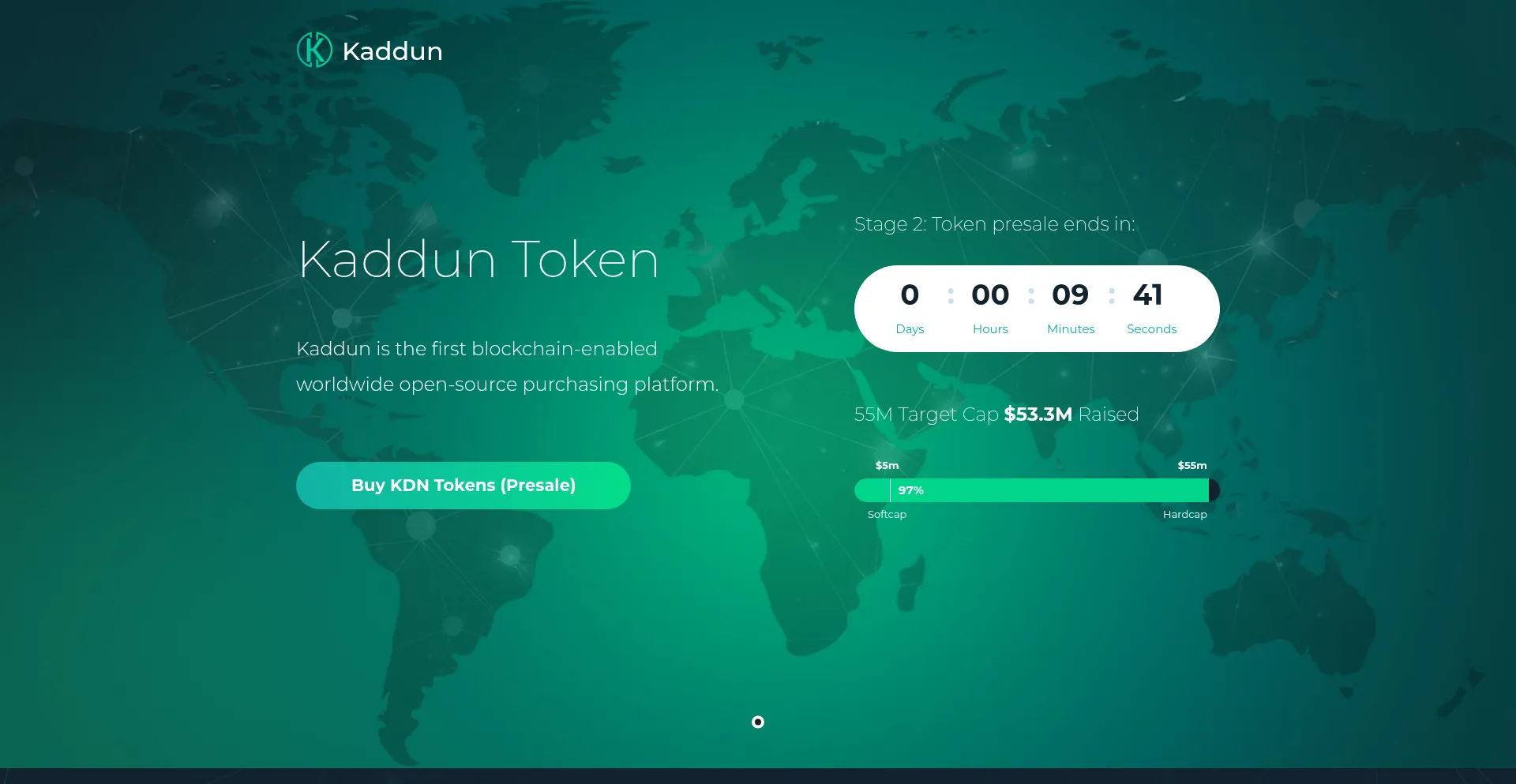
The digital retail landscape is undergoing a massive transformation, and at the center of this shift is Kaddun. If you have been following the convergence of artificial intelligence and Web3, you have likely heard this term circulating among institutional investors, supply chain logistics experts, and blockchain developers. But what exactly is Kaddun? In short, it is a next-generation machine intelligence infrastructure designed to fundamentally overhaul traditional e-commerce. Built on the high-performance Base Layer-2 network, Kaddun acts as an AI-native commerce protocol that eliminates the friction of legacy online shopping. By establishing a fully autonomous ecosystem where AI agents manage data, execute smart contracts, and facilitate decentralized trade, this project is positioning itself as the premier “phygital” retail layer for the modern internet.
Quick Facts: The Ecosystem at a Glance
- Project Name: Kaddun
- Native Token: KDN
- Blockchain Network: Base Layer-2
- Core Sector: AI-Powered E-Commerce and Web3 Retail
- Primary Innovation: Autonomous AI Shopping Companions and 3D Virtual Environments
- Initial Token Value: $0.012 (ICO Phase)
Understanding the Core Purpose of Kaddun
Traditional e-commerce platforms suffer from exorbitant processing fees, opaque supply chains, and a frustrating disconnect between digital imagery and physical reality. Consumers constantly struggle with static, two-dimensional shopping experiences that inevitably lead to high return rates and customer dissatisfaction. Kaddun solves these inherent flaws by introducing a machine-native operational layer where intelligent agents manage interactions through cryptographically verified processes.
Unlike legacy platforms where artificial intelligence is merely a predictive support tool used to serve targeted advertisements, this protocol treats AI as an autonomous participant in the digital ecosystem. Intelligent systems operate with verifiable identity and cryptographic accountability. This means that when you interact with the network, AI agents are not just serving ads; they are actively negotiating resource allocation, executing smart contract logic, and bridging the gap between digital assets and physical fulfillment.
This architecture marks a radical shift from centralized commerce models. By deploying autonomous agents capable of independent decision-making, the project eliminates the need for constant human mediation. This creates a highly secure, decentralized environment where merchants, logistics providers, and buyers can interact with total transparency and unprecedented speed.
The Three-Tiered Architecture Powering Kaddun
To function as a fully accountable digital ecosystem, the network relies on a sophisticated, multi-layered framework. This foundational structure ensures that machines can operate independently while remaining highly verifiable to human auditors.
Cognitive Identity and Authentication Layer of Kaddun
The foundational layer of the protocol assigns each AI agent a cryptographically secured identity. This identity exists completely independent of human oversight. Every operation initiated by an AI system—whether it involves accessing proprietary supply chain data or executing a retail trade—is authenticated and tamper-resistant. This vital security measure prevents bad actors from exploiting the network and ensures that all autonomous actions remain fully traceable.
Adaptive Governance and Smart Agreement Layer
Traditional smart contracts rely on static conditions and fixed logic, which drastically limits their utility in dynamic, fast-paced retail environments. Kaddun replaces this rigidity with adaptive governance mechanisms. These highly intelligent contracts evolve in response to real-time analytics, environmental signals, and fluctuating market data. This flexibility allows the decentralized system to adjust pricing, manage complex supply chain routing, and execute multi-step workflows without requiring manual human intervention.
Immutable Transaction and Verification Layer
All commercial activity within the ecosystem is recorded on a specialized decentralized ledger optimized specifically for machine-speed verification. Data permissions, broad policy updates, and individual agent interactions are permanently logged. This immutable layer provides global enterprises with a transparent operational record, ensuring absolute clarity during comprehensive audits and stringent regulatory reviews.
Reimagining the Shopping Experience with Kaddun
Beyond backend technical infrastructure, the platform is fundamentally changing how global consumers interact with their favorite brands. By transitioning from tedious two-dimensional scrolling to high-fidelity, spatial interfaces, the project delivers a deeply immersive retail environment.
The Digital Mall and Interactive Storefronts
The platform introduces a dynamic 3D retail world where users seamlessly navigate spatial environments that closely mimic high-end physical shopping. Users can explore interactive storefronts, engage with digital twins of physical products, and experience brand narratives in real-time. This highly immersive approach significantly increases consumer engagement and drives substantially higher conversion rates for participating merchants.
AI-Enhanced Virtual Try-Ons
One of the most significant overhead costs crippling modern e-commerce is the exceptionally high rate of product returns. Kaddun utilizes advanced visual AI and Augmented Reality (AR) to generate highly precise digital twins of consumer products. Shoppers can preview clothing, apparel, and complex accessories with hyper-accurate virtual try-ons. This tangible preview mechanism slashes return rates and massively boosts buyer confidence prior to checkout.
Real-World Logistics and Physical Fulfillment
The project successfully bridges the lingering gap between digital bits and physical atoms. Every financial transaction finalized within the virtual mall instantly triggers a real-world logistics chain. The decentralized network coordinates the delivery of physical goods directly to the consumer’s doorstep, ensuring that the digital purchase translates flawlessly into physical ownership.
Kaddun vs. Traditional E-Commerce Platforms
To truly grasp the value proposition of this technology, it helps to compare this AI-driven protocol directly with legacy retail platforms. The critical differences extend far beyond payment methods.
| Feature | Legacy E-Commerce Giants | The Kaddun Protocol |
| User Interface | Static, 2D scrolling interfaces | Immersive 3D, spatial digital malls |
| Role of AI | Intrusive, ad-driven predictive algorithms | Autonomous, personalized shopping companions |
| Infrastructure | Centralized servers prone to downtime | Decentralized Layer-2 blockchain (Base) |
| Smart Contracts | Static logic requiring manual oversight | Adaptive governance responding to real-time data |
| Merchant Trust | Rely on easily manipulated review systems | Decentralized, on-chain credibility verification |
The Role of the Kaddun Token
The economic engine driving this vast ecosystem is the KDN utility token. Purposely designed for practical, real-world application rather than pure market speculation, the token facilitates every essential action within the decentralized marketplace.
Merchant Settlements and Low-Fee Transactions
Integrated directly into the native payment gateway, the KDN token enables seamless, ultra-low-fee purchases. This architectural advantage completely eliminates the heavy processing fees traditionally imposed by credit card networks and legacy payment processors. Merchants receive financial settlements instantly, which drastically improves their operational cash flow and overall business efficiency.
On-Chain Credibility and Consumer Trust
KDN is directly tied to a decentralized, on-chain system of merchant credibility. A merchant’s historical reputation is transparent, instantly verifiable, and entirely immutable. This provides everyday consumers with a powerful layer of security, ensuring they only transact with highly trusted, verified entities operating within the digital marketplace.
High-Frequency Utility and Market Liquidity
Because the token inherently powers AI data exchanges, smart contract execution, and community user rewards, it naturally maintains high-frequency utility. Furthermore, users can easily trade KDN for other major cryptocurrencies like Bitcoin and Ethereum at highly favorable conversion rates. This cross-chain versatility makes the digital asset highly appealing to a broad base of casual users and institutional participants.
Real-World Industry Applications for Kaddun
While digital retail remains the primary focus, the underlying machine intelligence infrastructure carries massive implications for multiple distinct sectors. The decentralized framework can be easily deployed wherever autonomous execution and verifiable digital trust are strictly required.
- Supply Chain Management: Autonomous digital agents can instantly verify global shipments, elegantly track complex logistics, and precisely coordinate global inventory updates entirely without manual human oversight.
- Financial Services: High-frequency trading algorithms and rigorous risk-management systems can securely execute advanced institutional strategies while reliably maintaining complete auditability and compliance traceability.
- Manufacturing and Industrial Operations: Intelligent predictive maintenance agents can autonomously monitor heavy equipment, rapidly initiate critical service requests, and proactively manage broad procurement cycles to forcefully prevent costly facility downtime.
Strategic Mistakes to Avoid When Engaging with AI Protocols
As decentralized AI projects rightfully gain market traction, enthusiastic participants often make critical strategic errors in how they choose to interact with these complex ecosystems. Whether you are a legacy merchant seeking to integrate the technology or a curious early adopter exploring the network, keeping these actionable insights in mind will prove invaluable.
- Treating Utility Tokens as Pure Speculation: Kaddun is strategically built for real-world application. Opting to hold the token purely for speculation completely ignores its primary, highly valuable function as a tool for rapid merchant settlements and for safely accessing premium AI commerce services. Engage deeply with the platform’s actual utility to maximize your overall experience.
- Ignoring On-Chain Reputation Metrics: E-commerce buyers often dangerously default to old habits, completely ignoring the highly secure, decentralized credibility systems deliberately built into the protocol. Always verify a merchant’s on-chain reputation before confidently executing large transactions within the spatial digital mall.
- Failing to Secure Digital Identities: The advanced cognitive identity layer powerfully protects autonomous AI agents, but human users must also diligently practice excellent digital security hygiene. Always use trusted hardware wallets and secure multi-factor authentication methods when safely connecting to decentralized payment gateways.
- Misunderstanding Layer-2 Bridge Mechanics: Because the ambitious project operates specifically on the Base Layer-2 network, everyday users must ensure they bridge their digital assets correctly. Haphazardly sending tokens directly via a Layer-1 network without utilizing the proper decentralized bridging protocols can tragically result in permanent asset loss.
The Future Roadmap and Global Exchange Listings
Market momentum is building exceptionally fast as the project advances aggressively toward full public deployment. After a highly successful Initial Coin Offering (ICO) that swiftly captured the focused interest of tens of thousands of early institutional and retail participants, the core development team is entirely focused on mainstream global accessibility.
Entering a pivotal new phase, Kaddun is executing a highly sophisticated listing strategy involving multiple Tier-1 global digital asset exchanges. The primary goal of this coordinated market debut is to quickly achieve instant token liquidity, generously providing deep-market access for both retail shoppers and sophisticated institutional stakeholders. By firmly transitioning from early-stage pricing to a robust market-driven valuation, the decentralized network practically ensures that ambitious merchants across all global jurisdictions can seamlessly access the token economy from day one.
This massive multi-exchange launch will also deliberately introduce exciting new decentralized governance models. Critical system upgrades, ongoing policy changes, and foundational architectural decisions will be governed strictly through multi-stakeholder community consensus, drastically reducing dangerous reliance on centralized administration. This ultimately ensures the long-term stability and structural resilience of the entire autonomous commerce ecosystem.
Why This Protocol Represents the Future of Digital Trade
The current aging iteration of internet e-commerce has undoubtedly reached its structural scalability limits. Global consumers are thoroughly exhausted by rigid, static interfaces, while independent merchants are constantly squeezed by egregiously high processing fees and agonizing logistical friction. By successfully blending a decentralized blockchain architecture with highly autonomous machine intelligence, this innovative protocol offers a tangible, highly scalable solution to these pervasive systemic problems.
The brilliant introduction of AI shopping companions, hyper-accurate virtual try-ons, and cryptographically verifiable merchant credibility fosters an environment where digital trust is mathematically guaranteed. As the global retail sector predictably accelerates its massive migration into the Web3 space, resilient projects that consistently deliver genuine utility and wildly immersive user experiences will unquestionably dominate the market.
Conclusion
The ongoing fusion of artificial intelligence and advanced blockchain technology is definitely no longer a mere theoretical concept; it is a fully operational market reality. Kaddun confidently represents a truly monumental leap forward in exactly how we naturally perceive and interact with global digital commerce. By decisively empowering highly intelligent agents to easily operate independently within a remarkably secure, globally decentralized framework, it flawlessly bridges the agonizing gap between physical retail fulfillment and the immersive digital metaverse. Whether you are a massive global enterprise looking to optimize sprawling supply chains or an everyday consumer simply seeking a vastly more immersive shopping experience, deeply understanding the underlying mechanics of Kaddun is absolutely essential for safely navigating the rapidly approaching future of global trade.